
Understanding your property’s true value can feel overwhelming, especially when tax bills arrive or you’re considering selling your home. Property appraisals affect your financial future in meaningful ways, influencing everything from annual tax obligations to selling prices and refinancing opportunities. In Lorain County, the Lorain County property appraiser works diligently to establish fair market values that reflect current conditions while respecting the diverse neighborhoods and property types across the region.
Whether you’re a longtime homeowner questioning your assessment, a new buyer trying to understand property values, or someone planning to appeal what seems like an unfair valuation, having accurate information brings clarity during uncertain moments. The Lorain County property appraiser process can seem mysterious, filled with technical terms and complex calculations. Yet understanding how the Lorain County property appraiser works, what factors influence your property’s assessed value, and when you might need professional help can transform confusion into confidence. Fair assessments protect your rights as a property owner while ensuring that tax burdens distribute equitably across the community. Knowledge empowers you to verify that your Lorain County property appraiser assessment reflects reality, not outdated data or incorrect assumptions.

Lorain County property appraiser conducting residential property assessment with professional documentation and valuation tools
Understanding the Lorain County Property Appraiser System
The Lorain County property appraiser system operates through the County Auditor’s office, where trained property appraiser professionals evaluate properties throughout the region to establish fair market values for taxation purposes. These valuations form the foundation of property tax calculations that fund schools, local governments, emergency services, and community infrastructure. The Lorain County property appraiser system balances the need for consistent, equitable assessments across thousands of properties with recognition that each home and parcel possesses unique characteristics.
The Lorain County property appraiser follows standardized methodologies designed to produce reliable, defensible valuations that withstand scrutiny. The process combines data analysis, market research, physical inspections, and professional judgment to arrive at assessed values. State regulations govern property appraiser procedures, ensuring consistency across counties while allowing for local market conditions and property characteristics specific to each community.
Understanding the Lorain County property appraiser system helps property owners recognize that appraisals serve important public purposes beyond individual tax bills. Fair assessments ensure that similar properties carry similar tax burdens, preventing situations where neighbors with comparable homes pay vastly different amounts. Transparency in the property appraiser process builds trust between government and citizens, allowing property owners to verify that valuations reflect actual market conditions rather than arbitrary decisions.
How Lorain County Property Appraisers Determine Value
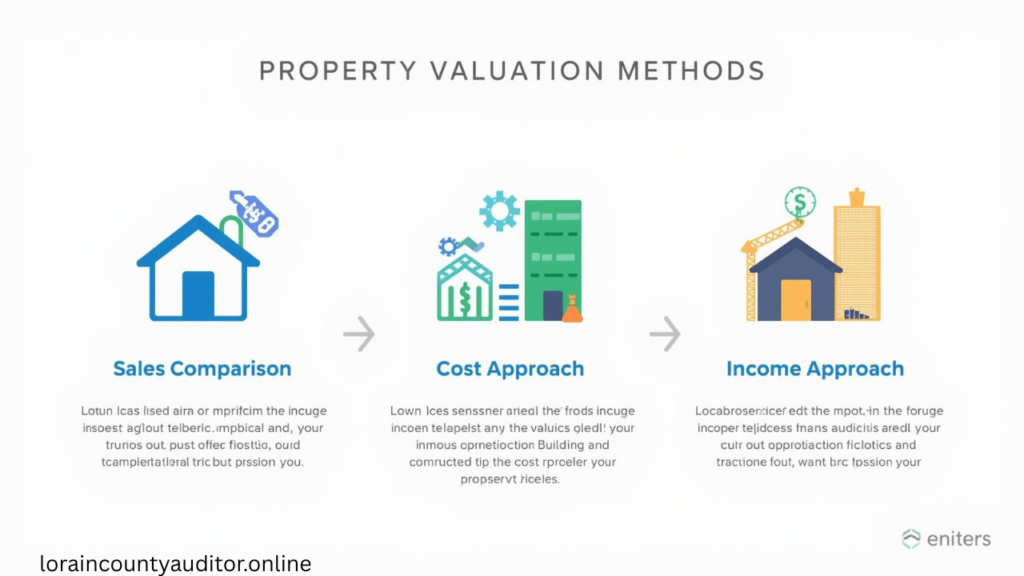
Lorain County property appraisers use multiple approaches to establish fair market values, with the sales comparison approach being most common for residential properties. This method examines recent sales of similar properties in comparable locations, adjusting for differences in size, condition, features, and other relevant factors. The Lorain County property appraiser analyzes transaction data to identify market trends and pricing patterns that inform individual property valuations.
The cost approach used by property appraisers calculates what it would cost to replace a building with a similar structure, then subtracts depreciation based on age and condition. This method works particularly well for newer properties or unique buildings where comparable sales data proves limited. Land value receives separate consideration by the Lorain County property appraiser, often based on recent vacant land sales in the area adjusted for location and characteristics.
For income-producing properties, the Lorain County property appraiser may employ the income approach, which estimates value based on the revenue a property generates. Rental rates, vacancy factors, operating expenses, and capitalization rates all factor into these calculations. Commercial and multi-unit residential properties typically receive evaluation through this lens, though residential properties might also see income approach analysis when rental potential affects market value.
Physical inspections allow the Lorain County property appraiser to verify property characteristics and identify features that affect value. Room counts, square footage, construction quality, updates, and overall condition all receive documentation during these visits. External factors like location, neighborhood trends, proximity to amenities or nuisances, and zoning classifications also influence final assessments that the Lorain County property appraiser records.
The Lorain County Property Appraiser Assessment Cycle
Property reappraisals conducted by the Lorain County property appraiser follow a triennial cycle, meaning comprehensive reassessments occur every three years as mandated by Ohio law. During these reappraisal years, the Lorain County property appraiser conducts systematic reviews of all properties to ensure assessed values align with current market conditions. Between full reappraisals, annual updates capture significant changes like new construction, major renovations, or demolished structures.
The Lorain County property appraiser reappraisal process begins months before new values take effect, with data collection, market analysis, and preliminary valuations occurring throughout the cycle. The property appraiser reviews recent sales data, analyzes construction costs, and monitors market trends that might affect property values across different neighborhoods and property types. Statistical models help the Lorain County property appraiser process large volumes of data efficiently while maintaining accuracy.
Property owners receive notification when their assessed values change significantly, providing opportunities to review the new valuations before they take effect. Understanding the Lorain County property appraiser timeline helps owners prepare for potential assessment changes and allows time to gather evidence if they believe valuations are incorrect. The cyclical nature means that values may not reflect very recent market shifts, particularly in rapidly changing neighborhoods.
Interim updates between full reappraisals capture major physical changes to properties. Building permits for additions, new home construction, or significant renovations trigger reassessments by the Lorain County property appraiser that adjust values to reflect improved or expanded properties. Demolitions reduce assessments when structures disappear. These ongoing adjustments prevent situations where property improvements go unrecognized for taxation purposes until the next full reappraisal.
Factors That Influence Your Property Appraisal
Location remains one of the most significant factors affecting property values that the Lorain County property appraiser considers, with neighborhood characteristics, school district quality, and proximity to employment centers all playing major roles. Properties in highly desirable areas with excellent schools and convenient access to amenities typically command higher values than comparable structures in less favorable locations. Even within single neighborhoods, specific site characteristics like corner lots, cul-de-sac positions, or waterfront access create value variations that the property appraiser recognizes.
Physical property characteristics directly impact appraisals conducted by the Lorain County property appraiser, with size being a primary consideration. Total living area measured in square feet, number of bedrooms and bathrooms, lot dimensions, and usable land area all factor into valuations. A 2,000 square foot home naturally appraises higher than an identical 1,500 square foot home, all else being equal.
Condition and quality of construction significantly affect how the Lorain County property appraiser evaluates homes. Well-maintained properties with recent updates to kitchens, bathrooms, mechanical systems, and finishes typically receive higher valuations than similar homes showing deferred maintenance or outdated features. Construction quality including materials, workmanship, and architectural appeal also influences assessments by property appraisers.
Age affects valuation through depreciation calculations that recognize how buildings deteriorate over time despite maintenance efforts. Newer construction generally appraises higher than older structures of similar size and quality, though historic character or superior original construction can offset age factors. Functional obsolescence occurs when design layouts or features no longer meet modern expectations, potentially reducing value below what physical condition alone might suggest.
External factors beyond property boundaries influence valuations through market dynamics and economic conditions. Strong local economies with job growth, population increases, and rising incomes typically drive property values upward. Conversely, economic downturns, plant closures, or population declines can suppress values. Interest rate changes affect buyer purchasing power and market activity, indirectly influencing appraisals.
Common Property Types and Appraisal Approaches
Residential properties including single-family homes represent the most common appraisal assignments for the Lorain County property appraiser, with sales comparison approaches dominating the methodology. The property appraiser identifies recently sold comparable properties, adjusts for differences, and arrives at indicated values. Subdivisions with similar homes provide abundant comparable data, while unique properties in diverse neighborhoods require more extensive research and adjustment by the Lorain County property appraiser.
Multi-family properties containing two to four units receive evaluation by the Lorain County property appraiser through both sales comparison and income approaches. Recent sales of similar multi-unit buildings provide market benchmarks, while rental income potential offers alternative value indications. Larger apartment complexes typically rely more heavily on income capitalization methods that reflect their investment nature.
Commercial properties encompass retail spaces, office buildings, industrial facilities, and mixed-use developments. The Lorain County property appraiser analyzes these properties primarily through income approaches, examining lease rates, operating expenses, and market capitalization rates. Sales comparisons supplement income analysis when sufficient transaction data exists for similar property types.
Vacant land appraisals consider highest and best use analysis, determining what development would maximize the site’s value given zoning regulations, physical characteristics, and market demand. Recent sales of comparable vacant parcels provide pricing guidance, adjusted for differences in size, location, utilities, and development potential. Land speculation can create volatility in vacant land values as market expectations shift.
Agricultural properties require specialized knowledge of farming operations, soil quality, and agricultural markets. Current Agricultural Use Value programs assess qualifying farmland based on agricultural productivity rather than development potential, significantly reducing tax burdens for working farms. Verification of active farming operations and income thresholds determines eligibility for these preferential valuations.
Understanding Your Property Tax Assessment Notice
Assessment notices arriving from the Lorain County property appraiser provide critical information about your property’s valuation and resulting tax implications. These documents from the property appraiser typically include the property address, parcel number, assessed land value, assessed building value, total assessed value, and any applicable exemptions or reductions. Comparing current assessments to previous years helps identify significant changes requiring attention.
Legal descriptions establish precise property boundaries using surveying terminology that defines what land the Lorain County property appraiser assessment covers. Verifying that legal descriptions match your actual property prevents situations where adjacent land or missing portions create valuation errors. Parcel numbers serve as unique identifiers connecting assessments to specific properties throughout various county systems.
Building characteristic data listed on assessment notices from the Lorain County property appraiser should match your property’s actual features. Square footage, room counts, construction year, exterior materials, and other details all affect valuations, so errors in these basics can lead to incorrect assessments. Common mistakes include wrong square footage from measurement errors, incorrect room counts, or failure to recognize demolitions or additions.
Comparable sales data sometimes appears on detailed assessment notices from the Lorain County property appraiser, showing which properties the appraiser used as benchmarks for your valuation. Reviewing these comparables helps you understand the valuation logic and identify potential problems if the comparable properties differ significantly from yours in ways not properly adjusted by the property appraiser.
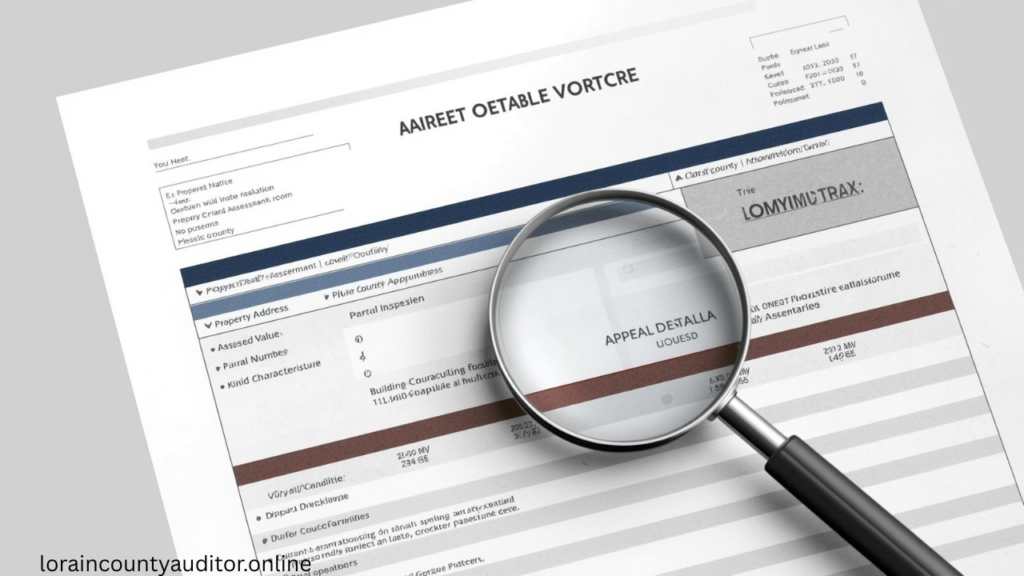
Deadlines for filing complaints or appeals appear prominently on assessment notices from the Lorain County property appraiser, emphasizing the limited time available to challenge valuations you believe are incorrect. Missing these deadlines typically means accepting the assessment for the current tax year, so immediate attention to notices prevents lost appeal opportunities.
When to Question Your Property Appraisal
Significant increases in assessed value exceeding what market conditions justify warrant careful review and potential challenges. While property values do appreciate over time, dramatic jumps that outpace neighborhood trends or recent sales in your area might indicate errors in the appraisal process. Comparing your assessment increase to those of similar nearby properties reveals whether you’re experiencing disproportionate changes.
Physical errors in property records provide clear grounds for questioning appraisals. If your assessment notice lists incorrect square footage, wrong number of rooms, features you don’t have, or fails to recognize demolitions or deterioration, these factual mistakes require correction. Gathering documentation like building plans, prior appraisals, or contractor estimates helps prove the actual property characteristics.
Market conditions contradicting your assessment create situations where appeals may succeed. If comparable homes in your neighborhood recently sold for amounts significantly below your assessed value, this market evidence suggests your appraisal exceeds fair market value. Collecting data on recent sales of similar properties strengthens appeals based on market conditions.
Neighborhood changes affecting property values might not receive proper recognition in assessments. Deteriorating commercial districts, increased crime, new nuisances like industrial facilities, or infrastructure problems reducing desirability can depress values below what historical data would suggest. Documenting these negative influences helps explain why your property deserves lower valuation than comparable properties in better locations.
Damage or deterioration occurring after the assessment reference date but before the tax year begins creates timing issues where assessed values don’t reflect current conditions. Storm damage, fire, flooding, or structural failures reducing property value and usability justify reassessments when properly documented through repair estimates and photographic evidence.
The Property Appraisal Appeal Process
Informal reviews with the Lorain County property appraiser provide the first opportunity to discuss concerns about assessments before formal appeals. Many disputes resolve at this stage when property owners present evidence of errors or explain circumstances the property appraiser may not have considered. Bringing documentation including recent appraisals, comparable sales data, photographs of property conditions, or evidence of record errors facilitates productive discussions with the Lorain County property appraiser.
Formal complaints to the County Board of Revision become necessary when informal discussions with the property appraiser don’t resolve valuation disputes. Filing deadlines typically fall within specific periods after assessment notices arrive, requiring prompt action to preserve appeal rights. Complaint forms ask for basic information about the property, current assessment, owner’s opinion of value, and reasons for believing the Lorain County property appraiser assessment is incorrect.
Evidence preparation determines appeal success, with strong cases built on factual documentation rather than general dissatisfaction with tax amounts. Recent appraisals conducted by licensed property appraisers provide powerful evidence of fair market value. Comparable sales data showing similar properties trading at prices below your assessment supports market-based arguments. Photographs documenting property conditions, repair estimates for damage, or evidence of physical errors all strengthen cases against the Lorain County property appraiser valuation.
Hearings before the Board of Revision allow property owners to present evidence and arguments supporting requested valuation reductions. The Lorain County property appraiser also presents the county’s case defending the assessment. Board members consider evidence from both sides before rendering decisions that either affirm, reduce, or occasionally increase assessed values determined by the property appraiser.
Further appeals to the Ohio Board of Tax Appeals remain available if County Board of Revision decisions seem unsatisfactory. These state-level appeals involve more formal procedures and often benefit from legal representation. Understanding the full appeal hierarchy helps property owners pursue all available remedies when convinced that assessments are fundamentally unfair.
Working with Professional Appraisers
Hiring independent professional appraisers provides expert opinions of property value useful during appeal processes or major financial decisions. These licensed professionals conduct thorough property inspections, extensive market research, and detailed analysis to arrive at supportable value conclusions. Their reports carry weight in appeal proceedings and provide credible evidence challenging county assessments.
Selecting qualified appraisers requires verifying proper licensing and experience with properties similar to yours. Residential appraisers specialize in single-family homes and small multi-unit properties, while commercial appraisers handle income-producing properties and specialized uses. Asking about comparable assignments they’ve completed, their familiarity with Lorain County markets, and their appeal experience helps identify capable professionals.
Appraisal costs vary based on property complexity, with simple residential appraisals typically costing less than commercial or unique property valuations. Understanding fee structures upfront prevents surprise expenses and helps you budget for professional assistance. While appraisal costs create out-of-pocket expenses, successful appeals potentially save tax dollars for years, making professional help worthwhile when assessments significantly exceed fair value.
Appraisal reports follow standardized formats presenting property descriptions, market analysis, methodology explanations, and value conclusions with supporting data. These comprehensive documents provide evidence supporting your appeal position and demonstrate professional analysis that county boards respect. Reviewing draft reports before finalization allows you to flag any factual errors or request clarifications.
Homestead Exemptions and Assessment Reductions
Homestead exemptions available through Ohio law reduce taxable assessed values for qualifying owner-occupied residences. The standard homestead exemption provides modest reductions for all eligible homeowners, while enhanced exemptions offer greater benefits to senior citizens, disabled persons, and surviving spouses. Applying for these exemptions through the Lorain County property appraiser’s office reduces annual tax obligations without requiring appeals.
Senior citizen homestead exemptions require applicants to meet age and income thresholds, with qualifying seniors receiving substantial reductions in their property’s taxable value. These exemptions recognize fixed incomes and encourage seniors to remain in their homes rather than facing displacement through rising property taxes. Application processes verify eligibility through age documentation and income tax returns.
Disabled homestead exemptions serve permanently and totally disabled property owners meeting specific criteria. Medical documentation establishing disability status supports applications, with approvals providing significant tax relief recognizing reduced earning capacity. These exemptions honor the challenges disabled homeowners face while encouraging homeownership despite financial limitations.
Owner-occupancy requirements for homestead exemptions ensure that benefits reach residents living in their homes rather than landlords or investors. Verification procedures confirm that applicants maintain the property as their primary residence. Rental properties, vacation homes, and investment properties don’t qualify regardless of ownership status, focusing benefits on actual residents.
Current Agricultural Use Value Programs
CAUV programs assess qualifying agricultural land based on productive value for farming rather than potential development value. This preferential assessment significantly reduces tax burdens on working farms, preserving agricultural operations against development pressure and property tax increases that might otherwise force land sales. Lorain County property appraisers administer these programs according to state formulas and local agricultural conditions.
Eligibility requirements include minimum acreage thresholds, gross income standards from agricultural production, and active farming for specified periods. Landowners must demonstrate genuine agricultural operations rather than hobby farming or land speculation. Documentation including tax returns showing farm income, production records, and land use verification supports CAUV applications.
Soil productivity ratings determine CAUV values, with higher-quality agricultural soils producing greater farm income and thus higher assessed values than marginal lands. Soil surveys classify properties into capability groups reflecting crop production potential. These scientific classifications ensure that CAUV valuations reflect actual agricultural value variations across different land parcels.
Recoupment penalties apply when CAUV land converts to non-agricultural uses, recapturing some tax savings received while under preferential assessment. These penalties discourage speculative CAUV enrollment by landowners planning eventual development. Understanding recoupment obligations helps landowners make informed decisions about CAUV participation and future land use changes.
Property Improvements and Assessment Impacts
Building permits for additions, renovations, or new construction trigger reassessments by the Lorain County property appraiser that capture increased property values. The timing and magnitude of assessment increases depend on project scope, construction costs, and market value impacts. Understanding how improvements affect assessments helps homeowners budget for future tax implications of property enhancements.
Finished basements, room additions, garage construction, and similar projects typically add significant assessed value proportional to the square footage and quality of improvements noted by the property appraiser. Kitchens and bathroom remodels also increase values, particularly when updating from dated configurations to modern layouts with quality fixtures and finishes. Swimming pools, decks, and landscaping contribute value though typically at lower rates than interior living space.
Depreciation schedules used by the Lorain County property appraiser recognize that improvements age and deteriorate over time, with newer additions contributing more value than older features. A ten-year-old kitchen renovation adds less value than a brand-new remodel of identical quality. Understanding depreciation helps property owners predict long-term assessment trajectories following improvements.
Energy efficiency upgrades like insulation, windows, HVAC systems, and solar panels improve property value through reduced operating costs and modern features buyers desire. While these improvements may not increase assessed values as dramatically as additional square footage, they contribute to overall property quality that the Lorain County property appraiser considers. Some energy improvements qualify for exemptions that exclude their value from taxation for specified periods.
Demolitions and damage reducing property value warrant reassessment requests to the Lorain County property appraiser to adjust valuations downward. Fire damage, structural failures, or intentional removal of outbuildings and features should prompt updated assessments reflecting diminished property. Failing to request these reductions from the property appraiser means paying taxes on value you no longer possess.
Comparing Your Assessment to Market Value
Market value represents the price property would likely command in open market transactions between willing buyers and sellers with reasonable knowledge and no compulsion. Assessed value for taxation purposes attempts to approximate market value but may diverge due to assessment timing, mass appraisal limitations, or market volatility. Understanding the relationship between these values helps property owners evaluate assessment fairness.
Assessment ratios in Ohio require properties to assess at 100% of market value, meaning assessed values should match true market values in properly functioning systems. However, the triennial reappraisal cycle means assessments reflect market conditions from the assessment reference date, potentially creating disparities if markets shift significantly before or during the tax year.
Comparable sales analysis comparing recent sales of similar properties to your assessed value reveals potential over-assessment or under-assessment. If multiple comparable properties sold recently for prices significantly below your assessed value, this evidence suggests your assessment may exceed market value. Conversely, sales above your assessed value might indicate your assessment is conservative.
Appraisal-to-sales ratio studies examine how assessed values compare to actual sale prices across many transactions. County-wide ratios near 100% indicate assessment accuracy, while ratios consistently above or below 100% suggest systematic over-assessment or under-assessment. Individual properties may vary from average ratios, but significant deviations warrant investigation.
Tax Rates and Assessment Relationships
Millage rates convert assessed values into actual tax bills through percentage calculations. Understanding that millage rates vary across different taxing jurisdictions helps property owners recognize that assessment changes don’t translate directly into equivalent tax increases. If assessments rise 10% but millage rates decrease, actual tax increases might be minimal.
Effective tax rates measure actual tax payments as percentages of market value, providing better comparisons across properties and jurisdictions than millage rates alone. Two properties with identical assessed values can have different effective tax rates if they’re located in different taxing districts with varying millage. These comparisons help buyers evaluate total tax burdens when considering properties in different areas.
Inside and outside millage distinctions affect how voted tax levies impact properties. Inside millage falls within constitutional limitations, while outside millage from voter-approved levies adds to base rates. Understanding these distinctions helps property owners predict how future levy votes might affect their tax obligations beyond assessment changes.
Tax reduction factors sometimes apply when property values increase faster than the 10-mill constitutional limitation allows for unvoted taxes. These reduction factors prevent tax increases exceeding legal limits even when assessed values rise substantially. The complex interaction between assessed values, millage rates, and reduction factors makes predicting exact tax bills challenging without detailed calculations.
Commercial Property Appraisal Considerations
Income capitalization methods dominate commercial property appraisals, with Lorain County property appraisers analyzing rental income, operating expenses, and market capitalization rates to estimate values. Net operating income divided by capitalization rates produces indicated values reflecting investment perspectives that drive commercial property markets. Understanding these calculations helps commercial property owners evaluate assessment reasonableness.
Lease analysis examines existing tenant agreements, rental rates, lease terms, and occupancy levels to estimate property income potential. Long-term leases at favorable rates support higher valuations, while vacancies or below-market rents reduce indicated values. Market rent analysis compares lease rates to prevailing market conditions to identify above or below-market lease situations.
Operating expense ratios compare property operating costs to income, with higher expense ratios reducing net operating income and thus property values. Property management fees, utilities, maintenance, insurance, and property taxes all factor into expense calculations. Accurate expense data improves appraisal reliability and helps identify properties operating efficiently versus those facing excessive costs.
Capitalization rate selection significantly impacts value conclusions, with lower cap rates producing higher values and higher cap rates indicating lower values. Market cap rates vary by property type, location, and economic conditions. Lorain County property appraisers research recent commercial sales and industry data to select appropriate cap rates reflecting local market conditions.
Special Assessment Districts and Valuations
Special assessment districts fund specific improvements benefiting properties within defined geographic areas. These assessments differ from general property taxes, targeting costs for projects like street improvements, sewer extensions, or drainage systems directly to benefiting properties. Understanding special assessments helps property owners anticipate total property-related costs beyond standard tax bills.
Benefit-based allocation distributes special assessment costs according to how much different properties benefit from improvements. Frontage along improved streets, connections to new sewer systems, or drainage relief from new infrastructure determine individual property shares. Properties receiving greater benefits bear proportionally higher assessment costs.
Payment options for special assessments typically include immediate lump sum payment or installment plans spreading costs over multiple years with interest charges. Choosing between payment methods depends on financial circumstances and opportunity costs of capital. Installment plans ease immediate cash flow impacts but increase total payments through accumulated interest.
Assessment liens attach to properties when special assessments remain unpaid, potentially complicating sales or refinancing until satisfied. Title searches reveal outstanding special assessments, requiring resolution during property transactions. Understanding lien priority and payment obligations protects buyers from inheriting unexpected financial burdens.
Technology and Modern Property Appraisal
Computer-assisted mass appraisal systems enable Lorain County property appraisers to process thousands of properties efficiently while maintaining valuation consistency. Statistical models analyze property characteristics and sales data to generate initial value estimates, with appraisers reviewing results and making adjustments based on individual property circumstances. This technology improves efficiency without eliminating professional judgment.
Geographic information systems integrate property data with spatial analysis, allowing appraisers to visualize market trends, identify comparable properties, and analyze location factors affecting values. Mapping tools reveal patterns invisible in traditional spreadsheet data, improving market understanding and valuation accuracy.
Automated valuation models use algorithms and historical data to estimate property values rapidly, though these computer-generated valuations lack the nuance and property-specific insights that professional appraisers provide. AVMs serve useful roles in preliminary valuations or portfolio analysis but shouldn’t replace thorough appraisals for assessment appeals or major financial decisions.
Digital photography and measurement tools improve documentation accuracy and efficiency during property inspections. Appraisers can capture detailed property conditions, generate precise measurements, and maintain comprehensive records supporting valuations. These technologies enhance appraisal quality while reducing time required for field work.
Understanding Market Trends in Lorain County
Real estate market cycles affect property values through changing supply and demand dynamics. Strong seller’s markets with limited inventory and multiple buyers competing for properties drive prices upward, while buyer’s markets with abundant supply and limited demand create price pressures downward. Recognizing current market phases helps property owners understand assessment changes and anticipate future trends.
Economic indicators including employment rates, wage growth, population changes, and business development influence property values throughout Lorain County. Growing employment opportunities attract residents and businesses, increasing property demand and values. Conversely, job losses and population declines suppress property markets and values.
Interest rate movements affect buyer purchasing power and market activity, indirectly influencing property values. Low interest rates enable buyers to afford higher-priced properties, potentially driving values upward. Rising rates reduce affordability and cool market activity, potentially stabilizing or reducing property values.
Neighborhood-specific trends create value variations across different areas within Lorain County. Emerging neighborhoods experiencing revitalization and investment see property values appreciate faster than stable areas or declining neighborhoods facing challenges. Understanding these micro-market dynamics helps property owners evaluate whether their assessments reflect local conditions accurately.
Preparing for Property Inspections
Scheduling flexibility helps appraisers conduct thorough inspections without unnecessary delays. Properties requiring assessment updates receive inspection notices, with cooperation ensuring accurate evaluations. Restricting access or refusing inspections may result in assessments based on limited information potentially disadvantaging property owners.
Property preparation should focus on safety and accessibility rather than staging for sale. Appraisers need to measure rooms, inspect systems, and document conditions accurately. Clearing clutter that prevents access to spaces ensures complete inspections. Major cleaning or staging isn’t necessary as appraisers evaluate structural elements and features rather than housekeeping.
Documentation gathering before inspections streamlines the process and ensures appraisers have information about improvements, renovations, or circumstances affecting value. Building permits, contractor receipts, and records of recent updates help appraisers understand property history and current condition. Evidence of damage or deterioration receives proper consideration when documented.
Question preparation allows property owners to address concerns during inspections when appraisers are physically present. Asking about comparable properties, valuation methodology, or specific features affecting your assessment provides insights into the appraisal process. However, appraisers may not provide final values during inspections as analysis occurs after data collection.
Long-term Property Value Planning
Home maintenance preserves property value and prevents deterioration that reduces assessed values and marketability. Regular upkeep of roofing, mechanical systems, exterior painting, and structural elements maintains property condition that supports valuations. Deferred maintenance leads to declining values and potentially costly repairs eventually.
Strategic improvements selected for value impact yield better returns than renovations chosen purely for personal preferences. Kitchen and bathroom updates, energy efficiency improvements, and additional living space typically add value exceeding costs. Highly personalized features or over-improvements exceeding neighborhood norms may not recover costs in higher valuations or sale prices.
Market awareness helps property owners time major decisions around market cycles when possible. Selling during strong markets maximizes returns while refinancing during low interest rate periods optimizes financing costs. Understanding how assessments and market values interact informs these strategic timing decisions.
Conclusion
Understanding how Lorain County property appraisers establish valuations empowers homeowners to verify assessment accuracy and challenge errors when necessary. Property appraisals significantly affect your financial obligations and property wealth, making informed engagement with the assessment process essential. Whether accepting appraisals as fair reflections of market value or pursuing appeals when evidence suggests errors, knowledge transforms an opaque process into an understandable system.
Responsible property ownership includes monitoring assessments, understanding valuation factors, and exercising appeal rights when appropriate. The Lorain County property appraiser system aims for fairness and accuracy, but occasional errors occur in any large-scale operation. Vigilant property owners who verify their assessments help maintain system integrity while protecting their own financial interests through informed participation in the appraisal process.
Frequently Asked Questions (FAQs)
What does a Lorain County property appraiser do?
Lorain County property appraisers establish fair market values for properties to calculate property taxes. They analyze sales data, inspect properties, and apply valuation methodologies to ensure equitable assessments across the county.
How often does Lorain County reappraise properties?
Lorain County conducts full property reappraisals every three years as required by Ohio law. Annual updates capture new construction and major improvements between reappraisal cycles to maintain assessment accuracy.
Can I appeal my property appraisal if I think it’s too high?
Yes, property owners can file complaints with the County Board of Revision if they believe assessments exceed fair market value. Deadlines appear on assessment notices and typically allow limited time for appeals.
What evidence helps win a property appraisal appeal?
Strong appeal evidence includes recent professional appraisals, comparable sales data showing lower values, photographs documenting property damage, or proof of errors in property records like incorrect square footage or features.
Do property improvements always increase my assessment?
Yes, most improvements like additions, renovations, or new construction increase assessed values proportional to the value added. Building permits typically trigger reassessments to capture these property enhancements.
What is the difference between assessed value and market value?
Market value represents the likely sale price in current market conditions, while assessed value is the county’s valuation for tax purposes. In Ohio, assessed values should equal market values at 100%.
How do homestead exemptions affect my property appraisal?
Homestead exemptions reduce taxable assessed values for qualifying owner-occupied homes. They don’t change the appraised value but lower the amount subject to taxation, reducing property tax bills.
Can I get a lower assessment if my neighborhood is declining?
Yes, neighborhood deterioration affecting property values provides grounds for assessment reductions. Evidence of declining sales prices, increased vacancies, or negative changes supports appeals based on diminished location value.
What happens if I disagree with the Board of Revision decision?
Property owners can appeal Board of Revision decisions to the Ohio Board of Tax Appeals if still unsatisfied. This state-level appeal involves formal procedures and often benefits from legal representation.
How do special assessments differ from regular property taxes?
Special assessments fund specific improvements benefiting particular properties, while property taxes support general government services. Special assessments are allocated based on benefit received rather than property value.
Should I hire a professional appraiser for my assessment appeal?
Professional appraisals provide credible evidence for appeals, especially when assessments significantly exceed what you believe is fair value. The cost may be worthwhile if potential tax savings exceed appraisal fees.
Do property appraisers inspect inside my home?
Appraisers may request interior access to verify property characteristics like room counts, square footage, and condition. Cooperation ensures accurate assessments, though exterior inspections sometimes suffice for routine reappraisals.