
Understanding your property tax obligations doesn’t have to feel overwhelming or confusing. The Lorain County Auditor real estate taxes system provides transparent information about how your bills are calculated and what you’re paying for. Whether you’re a new homeowner trying to budget for annual expenses, a longtime resident questioning assessment changes, or an investor analyzing potential purchases, this comprehensive guide helps you navigate the entire process with confidence.
Property taxation represents one of the most significant annual expenses for homeowners and business owners alike. These funds support essential community services including schools, emergency response, infrastructure maintenance, and local government operations. Knowing how assessments work, when payments come due, and what relief programs exist empowers you to manage this financial responsibility effectively without unnecessary stress or confusion.
The auditor’s office has modernized its systems making information more accessible than ever before. Online portals provide 24/7 access to detailed records about your property and tax obligations. You can verify calculations, check payment status, research historical data, and understand exactly where your money goes. This guide walks you through everything you need to know about managing your property taxes successfully.
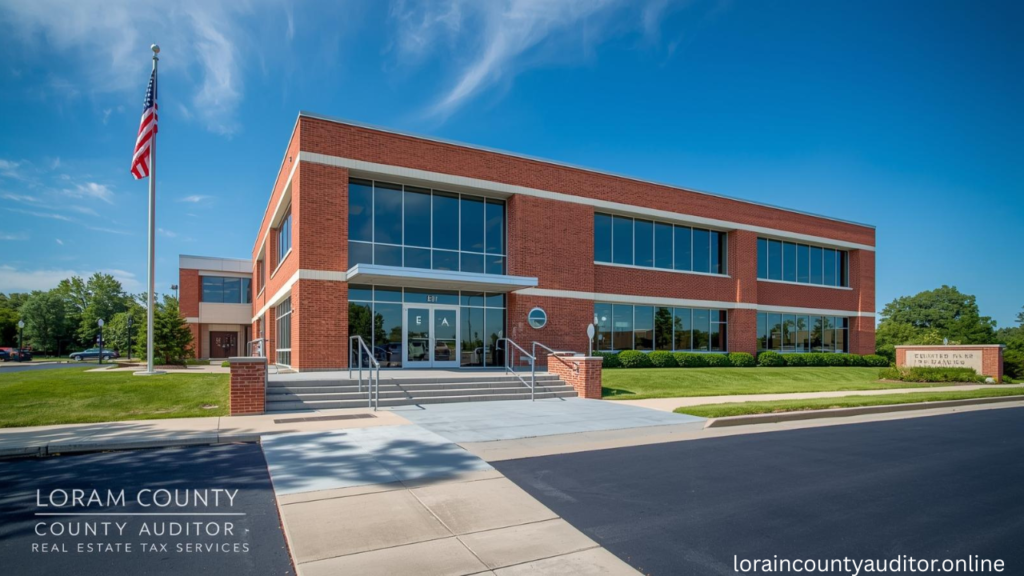
Lorain County Auditor real estate taxes office building with accessible entrance providing property tax assessment and payment services
Understanding Lorain County Auditor Real Estate Taxes
The Lorain County Auditor real estate taxes fund critical public services throughout the community. Schools receive the largest portion of most property tax bills. Municipal services, county operations, libraries, and special districts all depend on these revenues to function properly.
Tax calculations begin with property assessments conducted by professional appraisers. Ohio law requires assessing properties at 35% of true market value. This assessed value then gets multiplied by millage rates from various taxing authorities to determine your total obligation.
Each taxing entity sets its own millage rate based on budgets and voter-approved levies. One mill equals one dollar per thousand dollars of assessed value. Your location determines which combination of taxing districts apply to your specific property.
The system ensures fairness through standardized valuation methods and transparent record-keeping. All assessment data becomes public record accessible through online databases. This openness allows property owners to verify their information and compare it with similar properties nearby.
How Property Tax Bills Are Calculated
Understanding the calculation process helps you verify bill accuracy and identify potential errors. The Lorain County Auditor real estate taxes begin with determining your property’s market value. Professional appraisers analyze recent sales of comparable properties in your area establishing baseline values.
Physical characteristics significantly impact assessed values throughout the calculation process. Square footage, building age, construction quality, and lot size all factor into valuations. Special features like finished basements, updated kitchens, and garage spaces add measurable worth to assessments.
Location plays a crucial role in property valuation and resulting tax obligations. Homes near quality schools, shopping centers, and employment hubs typically carry higher assessments. Waterfront properties, scenic views, and park proximity add premium value affecting your annual bills.
Ohio’s 35% assessment ratio converts market values into taxable assessed values. A home worth $200,000 at market value carries a $70,000 assessed value for taxation purposes. This standardized ratio ensures consistency across all properties statewide.
Millage Rates and Tax Districts
Multiple taxing authorities contribute to your total annual bill through individual millage rates. School districts typically represent 60-70% of residential property tax obligations. County government, municipalities, and special purpose districts make up the remaining portions.
Voter-approved levies directly impact millage rates and your resulting tax bills. When communities pass school funding measures or infrastructure bonds, millage rates increase accordingly. Understanding levy cycles helps you anticipate future tax changes.
Inside versus outside millage designations affect how rates apply to different properties. Inside millage comes from constitutional limits while outside millage requires voter approval. These technical distinctions influence overall tax burdens across different jurisdictions.
Effective tax rates vary significantly across the county based on specific district combinations. Urban properties may face different total millage than rural areas due to varied service needs. Comparing effective rates helps buyers understand true costs across different communities.
Payment Schedules for Annual Bills
The Lorain County Auditor real estate taxes divide into two semi-annual installments making budgeting more manageable. First-half payments typically come due in late February each year. Second-half payments are due in late July allowing property owners to spread costs throughout the year.
Specific due dates can shift slightly based on weekends and holidays each year. The county treasurer’s office publishes exact deadlines well in advance. Missing these dates triggers automatic penalty and interest charges that accumulate until full payment occurs.
Payment notices arrive by mail several weeks before due dates providing ample preparation time. These statements detail your assessed value, applicable millage rates, and total amount owed. Breakdown sections show exactly how much goes to each taxing authority.
Early payment options allow paying the full year’s obligation at once if preferred. Some property owners budget monthly setting aside funds to ensure timely payment when bills arrive. Creating a payment strategy prevents last-minute financial stress and potential penalties.
Late Payment Consequences
Penalties begin accruing immediately after payment deadlines pass without full payment received. Ohio law sets specific penalty percentages that apply uniformly across all counties. These charges can add hundreds of dollars to your obligation if payments lag significantly.
Interest charges compound on top of penalties for extended delinquency periods. The combined effect of penalties and interest makes late payment financially painful. Avoiding these additional costs should motivate timely payment whenever possible.
Continued non-payment eventually leads to tax liens being placed against properties. These liens become public record affecting credit ratings and property marketability. Clearing liens requires paying all back taxes plus accumulated penalties and interest.
Foreclosure proceedings represent the ultimate consequence of prolonged tax delinquency. Counties can sell properties at tax sales to recover unpaid obligations. Losing property over unpaid bills is avoidable through proactive payment management and communication.
Online Access to Tax Information
The Lorain County Auditor real estate taxes portal provides comprehensive online access to all property tax information. Visit the official website to search by address, owner name, or parcel number. Results display current year obligations, payment status, and complete historical records.
Interactive features let you explore how tax bills break down by taxing authority. See exactly what percentage funds schools versus county services or municipal operations. This transparency helps residents understand where their money goes and why amounts change year to year.
Payment history shows which years have been satisfied and any outstanding balances. You can verify that previous payments were properly credited to your account. This record-keeping prevents disputes and provides documentation for mortgage companies or legal matters.
Mobile optimization ensures you can access information from smartphones and tablets anywhere. Check payment status while traveling or verify information during property showings. The responsive design adapts seamlessly to different screen sizes and devices.
Making Online Payments
Electronic payment options provide convenience and immediate confirmation for tax obligations. Credit cards, debit cards, and electronic checks all work through the secure payment portal. The system operates 24/7 allowing payments whenever your schedule permits.
Processing fees apply to credit card transactions covering merchant service costs. These small fees typically amount to 2-3% of the payment amount. Electronic check payments usually process fee-free making them the most economical online option.
Instant confirmation emails provide immediate proof of payment for your records. These receipts include transaction numbers, payment amounts, dates, and property information. Save these confirmations as backup documentation should any questions arise later.
Payment plans help property owners facing temporary financial difficulties manage their obligations. Contact the treasurer’s office to discuss installment options based on your situation. Proactive communication prevents penalties while working through challenging financial periods.
Assessment Cycles and Reappraisals
The Lorain County Auditor real estate taxes reflect values established through mandatory reappraisal cycles. Ohio law requires full countywide reappraisals every six years ensuring assessments stay current with markets. Update years occur at the three-year midpoint using statistical analysis.
During full reappraisal years, field appraisers physically inspect properties updating all records. They measure structures, photograph buildings, and note improvements or deterioration. This hands-on approach ensures assessments reflect actual current conditions rather than outdated assumptions.
Update years adjust values using market trend analysis without individual property visits. Statistical models analyze sales data identifying how different property types and neighborhoods appreciated or depreciated. These adjustments keep values reasonably current between full reappraisals.
Property owners receive notices when assessments change significantly informing them of new values. These notifications include effective dates and information about appeal rights. Understanding this timeline helps you prepare for potential tax increases or decreases.
Impact on Annual Bills
Assessment increases don’t always translate to proportional tax increases due to various factors. If all properties in a district appreciate similarly, individual tax burdens may remain relatively stable. The relationship between assessments and actual taxes depends on millage rates and district-wide valuation changes.
Revenue neutral rates prevent windfall collections when assessments rise across entire districts. Taxing authorities adjust millage rates downward offsetting assessment increases in some circumstances. This mechanism provides some protection against dramatic bill increases from reappraisals alone.
New levies and voter-approved increases impact bills more directly than assessment changes. When communities pass school funding measures or infrastructure bonds, everyone sees increases. Tracking local ballot issues helps you anticipate future tax obligation changes.
Individual property improvements trigger assessment increases between regular reappraisal cycles. Building additions, finished basements, or new garages add value prompting reassessment. Understanding this encourages strategic timing of major home improvement projects.
Tax Reduction Programs and Exemptions
The Lorain County Auditor real estate taxes offer several programs reducing obligations for qualifying property owners. Homestead exemptions provide the most common relief benefiting seniors and disabled individuals. These programs can save hundreds or thousands of dollars annually depending on property values.
Senior citizens aged 65 or older qualify for homestead exemptions reducing assessed values by $25,000. This reduction applies only to owner-occupied primary residences not investment properties. The savings compound annually making significant differences in long-term tax burdens.
Disabled individuals regardless of age also qualify for homestead exemption benefits. Disability verification from physicians or government agencies satisfies the eligibility requirements. The same $25,000 assessed value reduction applies providing meaningful financial relief.
Owner-occupancy credits reward residents who live in their properties rather than renting them out. These credits recognize that owner-occupied properties often contribute more positively to neighborhood stability. The reductions vary but provide additional savings beyond standard exemptions.
Application Processes
Homestead exemption applications require specific documentation proving age or disability status. Birth certificates, driver’s licenses, or Social Security documents verify senior applicant ages. Disability applicants need medical documentation or government benefit verification letters.
Application deadlines fall early in each year requiring advance planning and prompt submission. The auditor’s office processes applications verifying eligibility before approving benefits. Late applications may not take effect until the following tax year.
Once approved, exemptions continue automatically in subsequent years without reapplication. The system tracks eligible properties removing exemptions only when ownership changes or eligibility ends. This automatic renewal simplifies ongoing participation for qualified property owners.
Changes in circumstances require notifying the auditor’s office promptly to maintain compliance. Selling properties, moving out, or other status changes affect eligibility. Failure to report changes can result in repayment of improperly received benefits.
Appealing Your Property Assessment
The Lorain County Auditor real estate taxes assessment can be challenged through formal appeal procedures. Property owners believing their valuations exceed true market value have the right to contest them. Understanding the process and requirements helps you exercise this right effectively.
Filing windows open after receiving assessment change notices in reappraisal or update years. You typically have 30 days from the notice date to submit complaints to the Board of Revision. Missing these deadlines means waiting years for another opportunity to challenge values.
Evidence requirements demand substantial proof that assessments exceed actual market values. Professional appraisals from licensed appraisers carry the most weight in appeal hearings. Comparable sales data showing similar properties sold for less supports valuation reduction claims.
The Board of Revision operates independently hearing evidence from both property owners and the auditor’s office. Board members weigh all evidence before rendering decisions that can increase, decrease, or maintain assessments. Their rulings become final unless appealed to higher authorities.
Building Your Case
Comparable sales research forms the foundation of most successful property assessment appeals. Find at least three truly similar properties that sold recently in your immediate area. Document how your property compares unfavorably despite carrying a higher assessed value.
Professional appraisals provide expert opinions about true market value from licensed professionals. These detailed reports cost several hundred dollars but can save thousands in reduced taxes over time. Appraisers inspect properties, analyze markets, and defend their conclusions during hearings if needed.
Property condition documentation proves assessment inaccuracies or changes since the last inspection. Photographs showing damage, deterioration, or outdated features support claims that values should be lower. Contractor estimates for needed repairs quantify financial impacts on market value.
Organized presentation materials help board members understand your case clearly and quickly. Create exhibits, summaries, and visual aids that present evidence professionally. Respectful, factual presentations tend to receive more favorable consideration than emotional arguments.
Understanding Your Tax Statement
The Lorain County Auditor real estate taxes statement provides detailed information about your annual obligations. Understanding how to read these documents helps verify accuracy and identify potential errors. Each section serves specific purposes in documenting your tax situation.
Property identification details appear at the top including parcel number, address, and legal description. Owner names and mailing addresses ensure bills reach the responsible parties. Verify this information for accuracy especially after purchases or ownership changes.
Assessed value breakdown shows separate land and building values totaling your taxable assessment. This distinction matters for understanding how improvements affect overall valuations. Comparing these components with similar properties reveals potential assessment discrepancies.
Millage rate sections list every taxing authority receiving portions of your payment. Each entity shows its individual millage rate and resulting dollar amount. These breakdowns reveal exactly where your money goes and why totals equal what they do.
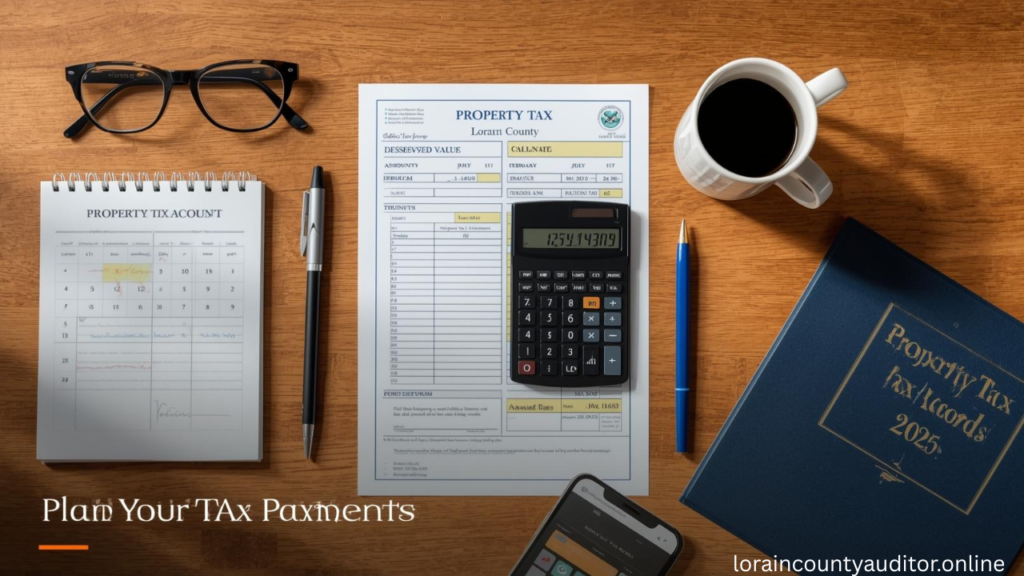
Property tax bill and calculator showing Lorain County Auditor real estate taxes assessment, payment schedule and millage rate calculations
Payment Information Details
Current year charges appear prominently showing amounts due for each installment period. First-half and second-half amounts may differ slightly due to various adjustments. Total annual obligations sum these installments providing the full-year cost.
Prior year information shows whether previous obligations were satisfied or remain outstanding. Any unpaid balances from earlier years appear with accumulated penalties and interest. This historical view helps track your payment compliance over time.
Due dates for upcoming payments appear clearly stated preventing confusion about deadlines. Mark these dates on calendars immediately upon receiving statements. Setting payment reminders helps ensure timely payment avoiding unnecessary penalties.
Payment options and instructions guide you through available methods for satisfying obligations. Mail-in addresses, online portal information, and in-person payment locations all appear clearly. Choose the method most convenient for your situation and preferences.
Commercial Property Tax Considerations
The Lorain County Auditor real estate taxes apply different valuation methods to commercial properties. Business owners and commercial investors face unique assessment challenges compared to residential owners. Understanding these distinctions helps manage commercial property tax obligations effectively.
Income approaches dominate commercial property valuations rather than simple sales comparisons. Appraisers analyze rental income potential, operating expenses, and capitalization rates. These complex calculations aim to reflect investment value rather than simple replacement costs.
Property classifications affect how commercial real estate gets assessed and taxed. Retail, office, industrial, and mixed-use properties all receive different treatment. Classification impacts both valuation methods and applicable millage rates in some circumstances.
Business personal property gets taxed separately from real estate requiring additional filings. Equipment, inventory, and fixtures fall under personal property taxation. Business owners must file annual declarations listing these assets for proper taxation.
Managing Commercial Obligations
Quarterly estimated payments may apply to large commercial properties with substantial obligations. These advance payments help taxing authorities manage cash flow for service provision. Understanding payment schedules prevents missed deadlines and resulting penalties.
Lease agreements should clearly state which party bears property tax responsibilities. Landlords typically pay taxes while tenants may reimburse through operating expense clauses. Reviewing lease terms prevents disputes about tax obligation responsibilities.
Economic development incentives sometimes provide temporary tax abatements for commercial projects. These programs encourage investment in targeted areas or specific development types. Researching available incentives can significantly impact project feasibility and returns.
Professional tax representation often makes sense for high-value commercial properties. Specialized consultants understand complex valuation issues and appeal processes. Their expertise can save far more than their fees through successful assessment reductions.
Agricultural Land Tax Treatment
The Lorain County Auditor real estate taxes treat agricultural land differently through special programs. Current Agricultural Use Valuation (CAUV) assesses farmland based on agricultural income potential rather than development value. This preferential treatment helps preserve working farms against development pressure.
Qualifying requirements include minimum acreage thresholds and active agricultural use documentation. Land must be devoted to commercial agricultural production not just hobby farming. Detailed applications prove eligibility through production records and income documentation.
Soil quality ratings significantly impact CAUV assessments affecting annual tax obligations. Prime farmland with excellent soils assesses differently than marginal agricultural property. These technical classifications come from official soil surveys conducted by federal agencies.
Conversion penalties apply when CAUV land leaves agricultural use for development. Recent tax savings get recaptured when properties convert to residential or commercial uses. Understanding these consequences helps landowners make informed decisions about property use changes.
CAUV Application Process
Application deadlines fall early each year requiring advance planning by farmland owners. Complete forms documenting agricultural activities and income must be submitted timely. The auditor’s office reviews applications verifying eligibility before approval.
Renewal requirements mandate continuing agricultural use to maintain CAUV eligibility. Properties must remain in active farming or the preferential assessment ends. Annual verification ensures only qualifying land receives these tax benefits.
Tax savings through CAUV can be substantial especially for farmland near developing areas. Properties worth millions as development land may carry assessments of just thousands for agriculture. These savings help farmers continue operations despite surrounding development pressure.
Estate planning considerations include CAUV’s impact on inherited farmland taxation. Heirs continuing agricultural operations can maintain CAUV status and benefits. Converting to other uses triggers recapture potentially creating significant tax obligations for estates.
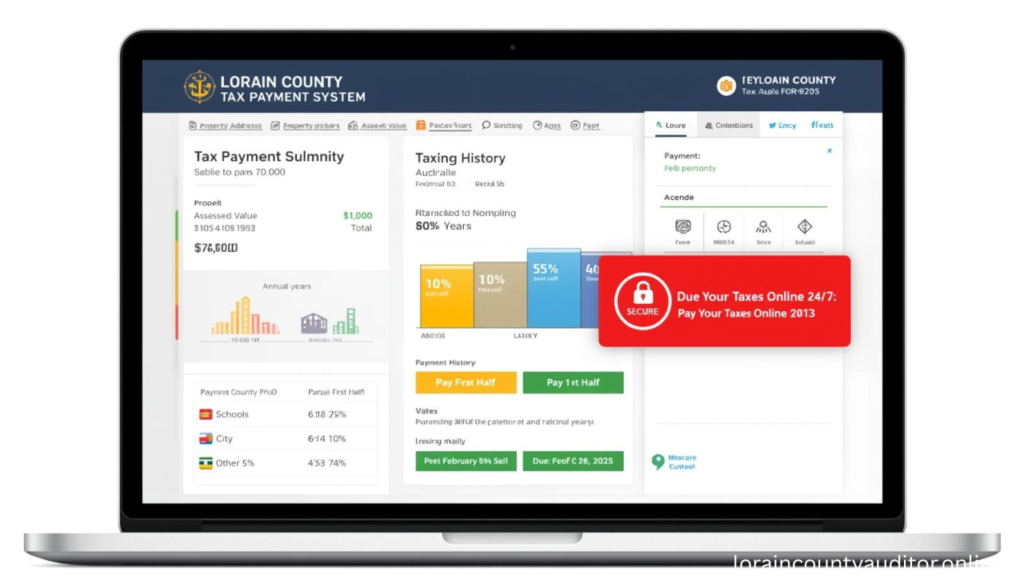
Lorain County Auditor real estate taxes online payment portal displaying tax bill breakdown, payment options and secure electronic payment system
Tax Foreclosure Process
The Lorain County Auditor real estate taxes system includes enforcement mechanisms for chronic non-payment. Understanding foreclosure processes motivates timely payment and helps struggling owners seek assistance early. Prevention always costs less than dealing with foreclosure consequences.
Delinquency begins immediately when payments aren’t received by posted deadlines. Initial penalties and interest start accumulating making obligations grow beyond original amounts. These additional charges can double or triple original bills over extended delinquency periods.
Tax liens get filed against properties after substantial delinquency periods pass. These public records appear in title searches affecting property marketability and creditworthiness. Liens must be satisfied before properties can be sold or refinanced.
Foreclosure proceedings start after multiple years of non-payment exhaust all collection alternatives. Legal notices inform property owners of impending actions and final opportunities to resolve obligations. Once foreclosure completes, properties get sold at public auction to recover debts.
Avoiding Foreclosure
Communication with the treasurer’s office opens doors to payment plans and hardship assistance. Officials prefer collecting taxes over foreclosing properties when owners demonstrate good faith. Proactive contact before severe delinquency develops creates more options.
Payment agreements allow spreading back taxes over manageable installment schedules. These arrangements typically require staying current on new obligations while paying down old debts. Compliance with agreements prevents foreclosure while resolving delinquencies gradually.
Community resources sometimes provide emergency assistance preventing tax foreclosure. Non-profit organizations and charitable foundations help qualifying homeowners facing temporary hardships. County officials can direct struggling owners toward available assistance programs.
Legal assistance may help navigate complex situations involving estates, bankruptcies, or disputes. Attorneys specializing in tax and property law understand options for different circumstances. Professional guidance can prevent property loss in complicated situations.
Impact on Property Values
The Lorain County Auditor real estate taxes directly influence property values and marketability throughout the county. High tax burdens reduce what buyers can afford making properties less attractive. Conversely, lower obligations increase affordability and buyer interest significantly.
Effective tax rates vary significantly across different communities and school districts. Buyers comparing similar homes in different areas consider tax obligations alongside purchase prices. Total housing costs including taxation determine true affordability for most buyers.
School district quality correlates strongly with both property values and tax rates. Excellent schools command premium home prices but often carry higher millage rates. Buyers must balance educational quality against resulting tax obligations carefully.
Commercial investors analyze tax burdens when evaluating potential acquisitions and returns. High taxation reduces net operating income affecting property values and investment yields. Understanding local tax environments helps investors identify attractive opportunities.
Homestead Exemption Benefits
The homestead exemption program represents one of the most valuable tax reduction opportunities available. The Lorain County Auditor real estate taxes office administers this program helping qualified residents save substantially. Understanding eligibility requirements ensures you don’t miss out on available benefits.
Qualifying residents receive a $25,000 reduction in their property’s assessed value. This translates to significant annual savings depending on local millage rates. For many seniors and disabled individuals, these savings make home ownership more affordable.
The program requires owner-occupancy meaning you must live in the property as your primary residence. Rental properties and vacation homes don’t qualify regardless of the owner’s age or disability status. This requirement ensures benefits go to those using properties as their main homes.
Application processes are straightforward but require attention to deadlines and documentation. Submit applications early in the year before deadlines pass. Gathering required documents in advance streamlines the application process.
Property Tax Calendar
The Lorain County Auditor real estate taxes follow an annual calendar with important dates and deadlines. Understanding this timeline helps you stay compliant and avoid penalties. Mark key dates on your personal calendar as soon as you receive official notices.
January typically sees the mailing of tax bills for the coming year. Review these statements carefully checking for accuracy in assessed values and calculations. Report any discrepancies to the auditor’s office immediately.
February brings the first-half payment deadline usually in the last week of the month. Late payments after this date incur immediate penalties. Budget accordingly to ensure funds are available when this deadline approaches.
July features the second-half payment deadline typically also in the final week. This spacing allows homeowners to spread tax obligations across the year. Missing this deadline also triggers penalties and interest charges.
Resources and Assistance
The Lorain County Auditor real estate taxes office provides numerous resources helping property owners understand their obligations. Staff members answer questions, explain processes, and assist with various issues. Don’t hesitate to reach out when you need clarification or help.
The official website offers comprehensive information, forms, and online tools. Access property records, payment histories, and educational materials 24/7. Downloadable guides explain complex topics in plain language.
Phone support connects you directly with knowledgeable staff during business hours. Prepare your parcel number and specific questions before calling for efficient service. Staff can explain assessments, payment options, and available programs.
In-person assistance remains available for those preferring face-to-face interactions. Visit the auditor’s office during posted hours bringing relevant documents and identification. Personal service helps with complex situations requiring detailed review.
Tax Planning Strategies
The Lorain County Auditor real estate taxes require thoughtful planning to manage effectively. Strategic approaches help minimize obligations while ensuring compliance. Consider these tactics when developing your property tax management plan.
Budget monthly for tax obligations rather than scrambling at payment deadlines. Set aside one-twelfth of your annual tax bill each month. This approach prevents financial stress when large installments come due.
Monitor assessment notices carefully comparing values with similar properties in your area. Challenge assessments that appear excessive through proper appeal channels. Successful appeals can reduce obligations for years to come.
Research available exemption and reduction programs that might apply to your situation. Don’t assume you’re ineligible without investigating thoroughly. Many beneficial programs go underutilized simply because property owners don’t know about them.
Conclusion
The Lorain County Auditor real estate taxes fund essential services that make communities function effectively. Understanding how these obligations get calculated, when payments come due, and what programs offer relief empowers better financial management. Whether you’re a homeowner, business owner, or investor, this knowledge protects your interests.
Online tools have made accessing tax information easier than ever before. Take advantage of digital resources to verify assessments, check payment status, and research property records. This transparency promotes fairness while helping you understand exactly what you’re paying for.
Stay informed about reappraisal cycles, levy proposals, and available exemption programs. Proactive monitoring helps you anticipate changes and take advantage of savings opportunities. Knowledge truly empowers better property ownership and financial planning.
When questions or concerns arise, don’t hesitate to contact the auditor’s office for assistance. Staff members are there to help you understand the system and resolve issues. Your engagement with the tax system benefits both personal interests and community well-being.
FAQ Section
Q1: How are property taxes calculated in Lorain County? Taxes equal your property’s assessed value (35% of market value) multiplied by the combined millage rates from all applicable taxing districts.
Q2: When are tax payments due? First-half payments are typically due in late February and second-half payments in late July each year.
Q3: What happens if I pay late? Late payments incur penalties and interest charges that accumulate until full payment is received.
Q4: Who qualifies for homestead exemptions? Seniors aged 65+ and disabled individuals of any age qualify for $25,000 assessed value reductions on owner-occupied properties.
Q5: How often are properties reassessed? Full reappraisals occur every six years with statistical updates at the three-year midpoint.
Q6: Can I appeal my assessment? Yes, you have 30 days from receiving assessment change notices to file appeals with the Board of Revision.
Q7: Where can I view my tax information online? Visit the Lorain County Auditor website and search by address, owner name, or parcel number.
Q8: What is CAUV for agricultural land? Current Agricultural Use Valuation assesses farmland based on agricultural income rather than development potential.
Q9: How do I make online payments? Use the secure payment portal accepting credit cards, debit cards, and electronic checks 24/7.
Q10: What causes tax bill increases? Assessment increases, new voter-approved levies, or millage rate changes all contribute to rising obligations.
Meta Description (145 Characters)
Lorain County Auditor real estate taxes 2025: payment schedules, assessment info, exemptions & appeals. Understand your property tax obligations.
Alternative Description (145 Characters)
Master Lorain County Auditor real estate taxes: calculation methods, reduction programs, payment options & appeal process. Complete 2025 guide.
Finding accurate property information shouldn’t feel like solving a puzzle. The Lorain County Auditor property record system provides everything you need to make informed real estate decisions. Whether you’re buying your first home, researching neighborhood values, or verifying tax assessments, thes
pasted
jese ye article likha hai na wesa likho plz
22 Jan
Lorain County Auditor Real Estate Taxes: 5 Critical Facts 2025
Understanding your property tax obligations doesn’t have to feel overwhelming or confusing. The Lorain County Auditor real estate taxes system provides transparent information about how your bills are calculated and what you’re paying for. Whether you’re a new homeowner trying to budget for annual expenses, a longtime resident questioning assessment changes, or an investor analyzing potential purchases, this comprehensive guide helps you navigate the entire process with confidence.
Property taxation represents one of the most significant annual expenses for homeowners and business owners alike. These funds support essential community services including schools, emergency response, infrastructure maintenance, and local government operations. Knowing how assessments work, when payments come due, and what relief programs exist empowers you to manage this financial responsibility effectively without unnecessary stress or confusion.
The auditor’s office has modernized its systems making information more accessible than ever before. Online portals provide 24/7 access to detailed records about your property and tax obligations. You can verify calculations, check payment status, research historical data, and understand exactly where your money goes. This guide walks you through everything you need to know about managing your property taxes successfully.
Understanding Lorain County Auditor Real Estate Taxes
The Lorain County Auditor real estate taxes fund critical public services throughout the community. Schools receive the largest portion of most property tax bills. Municipal services, county operations, libraries, and special districts all depend on these revenues to function properly.
Tax calculations begin with property assessments conducted by professional appraisers. Ohio law requires assessing properties at 35% of true market value. This assessed value then gets multiplied by millage rates from various taxing authorities to determine your total obligation.
Each taxing entity sets its own millage rate based on budgets and voter-approved levies. One mill equals one dollar per thousand dollars of assessed value. Your location determines which combination of taxing districts apply to your specific property.
The system ensures fairness through standardized valuation methods and transparent record-keeping. All assessment data becomes public record accessible through online databases. This openness allows property owners to verify their information and compare it with similar properties nearby.
How Property Tax Bills Are Calculated
Understanding the calculation process helps you verify bill accuracy and identify potential errors. The Lorain County Auditor real estate taxes begin with determining your property’s market value. Professional appraisers analyze recent sales of comparable properties in your area establishing baseline values.
Physical characteristics significantly impact assessed values throughout the calculation process. Square footage, building age, construction quality, and lot size all factor into valuations. Special features like finished basements, updated kitchens, and garage spaces add measurable worth to assessments.
Location plays a crucial role in property valuation and resulting tax obligations. Homes near quality schools, shopping centers, and employment hubs typically carry higher assessments. Waterfront properties, scenic views, and park proximity add premium value affecting your annual bills.
Ohio’s 35% assessment ratio converts market values into taxable assessed values. A home worth $200,000 at market value carries a $70,000 assessed value for taxation purposes. This standardized ratio ensures consistency across all properties statewide.
Millage Rates and Tax Districts
Multiple taxing authorities contribute to your total annual bill through individual millage rates. School districts typically represent 60-70% of residential property tax obligations. County government, municipalities, and special purpose districts make up the remaining portions.
Voter-approved levies directly impact millage rates and your resulting tax bills. When communities pass school funding measures or infrastructure bonds, millage rates increase accordingly. Understanding levy cycles helps you anticipate future tax changes.
Inside versus outside millage designations affect how rates apply to different properties. Inside millage comes from constitutional limits while outside millage requires voter approval. These technical distinctions influence overall tax burdens across different jurisdictions.
Effective tax rates vary significantly across the county based on specific district combinations. Urban properties may face different total millage than rural areas due to varied service needs. Comparing effective rates helps buyers understand true costs across different communities.
Payment Schedules for Lorain County Auditor Real Estate Taxes
The Lorain County Auditor real estate taxes divide into two semi-annual installments making budgeting more manageable. First-half payments typically come due in late February each year. Second-half payments are due in late July allowing property owners to spread costs throughout the year.
Specific due dates can shift slightly based on weekends and holidays each year. The county treasurer’s office publishes exact deadlines well in advance. Missing these dates triggers automatic penalty and interest charges that accumulate until full payment occurs.
Payment notices arrive by mail several weeks before due dates providing ample preparation time. These statements detail your assessed value, applicable millage rates, and total amount owed. Breakdown sections show exactly how much goes to each taxing authority.
Early payment options allow paying the full year’s obligation at once if preferred. Some property owners budget monthly setting aside funds to ensure timely payment when bills arrive. Creating a payment strategy prevents last-minute financial stress and potential penalties.
Late Payment Consequences
Penalties begin accruing immediately after payment deadlines pass without full payment received. Ohio law sets specific penalty percentages that apply uniformly across all counties. These charges can add hundreds of dollars to your obligation if payments lag significantly.
Interest charges compound on top of penalties for extended delinquency periods. The combined effect of penalties and interest makes late payment financially painful. Avoiding these additional costs should motivate timely payment whenever possible.
Continued non-payment eventually leads to tax liens being placed against properties. These liens become public record affecting credit ratings and property marketability. Clearing liens requires paying all back taxes plus accumulated penalties and interest.
Foreclosure proceedings represent the ultimate consequence of prolonged tax delinquency. Counties can sell properties at tax sales to recover unpaid obligations. Losing property over unpaid bills is avoidable through proactive payment management and communication.
Online Access to Tax Information
The Lorain County Auditor real estate taxes portal provides comprehensive online access to all property tax information. Visit the official website to search by address, owner name, or parcel number. Results display current year obligations, payment status, and complete historical records.
Interactive features let you explore how tax bills break down by taxing authority. See exactly what percentage funds schools versus county services or municipal operations. This transparency helps residents understand where their money goes and why amounts change year to year.
Payment history shows which years have been satisfied and any outstanding balances. You can verify that previous payments were properly credited to your account. This record-keeping prevents disputes and provides documentation for mortgage companies or legal matters.
Mobile optimization ensures you can access information from smartphones and tablets anywhere. Check payment status while traveling or verify information during property showings. The responsive design adapts seamlessly to different screen sizes and devices.
Making Online Payments
Electronic payment options provide convenience and immediate confirmation for tax obligations. Credit cards, debit cards, and electronic checks all work through the secure payment portal. The system operates 24/7 allowing payments whenever your schedule permits.
Processing fees apply to credit card transactions covering merchant service costs. These small fees typically amount to 2-3% of the payment amount. Electronic check payments usually process fee-free making them the most economical online option.
Instant confirmation emails provide immediate proof of payment for your records. These receipts include transaction numbers, payment amounts, dates, and property information. Save these confirmations as backup documentation should any questions arise later.
Payment plans help property owners facing temporary financial difficulties manage their obligations. Contact the treasurer’s office to discuss installment options based on your situation. Proactive communication prevents penalties while working through challenging financial periods.
Assessment Cycles and Reappraisals
The Lorain County Auditor real estate taxes reflect values established through mandatory reappraisal cycles. Ohio law requires full countywide reappraisals every six years ensuring assessments stay current with markets. Update years occur at the three-year midpoint using statistical analysis.
During full reappraisal years, field appraisers physically inspect properties updating all records. They measure structures, photograph buildings, and note improvements or deterioration. This hands-on approach ensures assessments reflect actual current conditions rather than outdated assumptions.
Update years adjust values using market trend analysis without individual property visits. Statistical models analyze sales data identifying how different property types and neighborhoods appreciated or depreciated. These adjustments keep values reasonably current between full reappraisals.
Property owners receive notices when assessments change significantly informing them of new values. These notifications include effective dates and information about appeal rights. Understanding this timeline helps you prepare for potential tax increases or decreases.
Impact on Annual Bills
Assessment increases don’t always translate to proportional tax increases due to various factors. If all properties in a district appreciate similarly, individual tax burdens may remain relatively stable. The relationship between assessments and actual taxes depends on millage rates and district-wide valuation changes.
Revenue neutral rates prevent windfall collections when assessments rise across entire districts. Taxing authorities adjust millage rates downward offsetting assessment increases in some circumstances. This mechanism provides some protection against dramatic bill increases from reappraisals alone.
New levies and voter-approved increases impact bills more directly than assessment changes. When communities pass school funding measures or infrastructure bonds, everyone sees increases. Tracking local ballot issues helps you anticipate future tax obligation changes.
Individual property improvements trigger assessment increases between regular reappraisal cycles. Building additions, finished basements, or new garages add value prompting reassessment. Understanding this encourages strategic timing of major home improvement projects.
Tax Reduction Programs and Exemptions
The Lorain County Auditor real estate taxes offer several programs reducing obligations for qualifying property owners. Homestead exemptions provide the most common relief benefiting seniors and disabled individuals. These programs can save hundreds or thousands of dollars annually depending on property values.
Senior citizens aged 65 or older qualify for homestead exemptions reducing assessed values by $25,000. This reduction applies only to owner-occupied primary residences not investment properties. The savings compound annually making significant differences in long-term tax burdens.
Disabled individuals regardless of age also qualify for homestead exemption benefits. Disability verification from physicians or government agencies satisfies the eligibility requirements. The same $25,000 assessed value reduction applies providing meaningful financial relief.
Owner-occupancy credits reward residents who live in their properties rather than renting them out. These credits recognize that owner-occupied properties often contribute more positively to neighborhood stability. The reductions vary but provide additional savings beyond standard exemptions.
Application Processes
Homestead exemption applications require specific documentation proving age or disability status. Birth certificates, driver’s licenses, or Social Security documents verify senior applicant ages. Disability applicants need medical documentation or government benefit verification letters.
Application deadlines fall early in each year requiring advance planning and prompt submission. The auditor’s office processes applications verifying eligibility before approving benefits. Late applications may not take effect until the following tax year.
Once approved, exemptions continue automatically in subsequent years without reapplication. The system tracks eligible properties removing exemptions only when ownership changes or eligibility ends. This automatic renewal simplifies ongoing participation for qualified property owners.
Changes in circumstances require notifying the auditor’s office promptly to maintain compliance. Selling properties, moving out, or other status changes affect eligibility. Failure to report changes can result in repayment of improperly received benefits.
Appealing Your Property Assessment
The Lorain County Auditor real estate taxes assessment can be challenged through formal appeal procedures. Property owners believing their valuations exceed true market value have the right to contest them. Understanding the process and requirements helps you exercise this right effectively.
Filing windows open after receiving assessment change notices in reappraisal or update years. You typically have 30 days from the notice date to submit complaints to the Board of Revision. Missing these deadlines means waiting years for another opportunity to challenge values.
Evidence requirements demand substantial proof that assessments exceed actual market values. Professional appraisals from licensed appraisers carry the most weight in appeal hearings. Comparable sales data showing similar properties sold for less supports valuation reduction claims.
The Board of Revision operates independently hearing evidence from both property owners and the auditor’s office. Board members weigh all evidence before rendering decisions that can increase, decrease, or maintain assessments. Their rulings become final unless appealed to higher authorities.
Building Your Appeal Case
Comparable sales research forms the foundation of most successful property assessment appeals. Find at least three truly similar properties that sold recently in your immediate area. Document how your property compares unfavorably despite carrying a higher assessed value.
Professional appraisals provide expert opinions about true market value from licensed professionals. These detailed reports cost several hundred dollars but can save thousands in reduced taxes over time. Appraisers inspect properties, analyze markets, and defend their conclusions during hearings if needed.
Property condition documentation proves assessment inaccuracies or changes since the last inspection. Photographs showing damage, deterioration, or outdated features support claims that values should be lower. Contractor estimates for needed repairs quantify financial impacts on market value.
Organized presentation materials help board members understand your case clearly and quickly. Create exhibits, summaries, and visual aids that present evidence professionally. Respectful, factual presentations tend to receive more favorable consideration than emotional arguments.
Understanding Your Tax Statement
The Lorain County Auditor real estate taxes statement provides detailed information about your annual obligations. Understanding how to read these documents helps verify accuracy and identify potential errors. Each section serves specific purposes in documenting your tax situation.
Property identification details appear at the top including parcel number, address, and legal description. Owner names and mailing addresses ensure bills reach the responsible parties. Verify this information for accuracy especially after purchases or ownership changes.
Assessed value breakdown shows separate land and building values totaling your taxable assessment. This distinction matters for understanding how improvements affect overall valuations. Comparing these components with similar properties reveals potential assessment discrepancies.
Millage rate sections list every taxing authority receiving portions of your payment. Each entity shows its individual millage rate and resulting dollar amount. These breakdowns reveal exactly where your money goes and why totals equal what they do.
Payment Information Details
Current year charges appear prominently showing amounts due for each installment period. First-half and second-half amounts may differ slightly due to various adjustments. Total annual obligations sum these installments providing the full-year cost.
Prior year information shows whether previous obligations were satisfied or remain outstanding. Any unpaid balances from earlier years appear with accumulated penalties and interest. This historical view helps track your payment compliance over time.
Due dates for upcoming payments appear clearly stated preventing confusion about deadlines. Mark these dates on calendars immediately upon receiving statements. Setting payment reminders helps ensure timely payment avoiding unnecessary penalties.
Payment options and instructions guide you through available methods for satisfying obligations. Mail-in addresses, online portal information, and in-person payment locations all appear clearly. Choose the method most convenient for your situation and preferences.
Commercial Property Tax Considerations
The Lorain County Auditor real estate taxes apply different valuation methods to commercial properties. Business owners and commercial investors face unique assessment challenges compared to residential owners. Understanding these distinctions helps manage commercial property tax obligations effectively.
Income approaches dominate commercial property valuations rather than simple sales comparisons. Appraisers analyze rental income potential, operating expenses, and capitalization rates. These complex calculations aim to reflect investment value rather than simple replacement costs.
Property classifications affect how commercial real estate gets assessed and taxed. Retail, office, industrial, and mixed-use properties all receive different treatment. Classification impacts both valuation methods and applicable millage rates in some circumstances.
Business personal property gets taxed separately from real estate requiring additional filings. Equipment, inventory, and fixtures fall under personal property taxation. Business owners must file annual declarations listing these assets for proper taxation.
Managing Commercial Obligations
Quarterly estimated payments may apply to large commercial properties with substantial obligations. These advance payments help taxing authorities manage cash flow for service provision. Understanding payment schedules prevents missed deadlines and resulting penalties.
Lease agreements should clearly state which party bears property tax responsibilities. Landlords typically pay taxes while tenants may reimburse through operating expense clauses. Reviewing lease terms prevents disputes about tax obligation responsibilities.
Economic development incentives sometimes provide temporary tax abatements for commercial projects. These programs encourage investment in targeted areas or specific development types. Researching available incentives can significantly impact project feasibility and returns.
Professional tax representation often makes sense for high-value commercial properties. Specialized consultants understand complex valuation issues and appeal processes. Their expertise can save far more than their fees through successful assessment reductions.
Agricultural Land Tax Treatment
The Lorain County Auditor real estate taxes treat agricultural land differently through special programs. Current Agricultural Use Valuation (CAUV) assesses farmland based on agricultural income potential rather than development value. This preferential treatment helps preserve working farms against development pressure.
Qualifying requirements include minimum acreage thresholds and active agricultural use documentation. Land must be devoted to commercial agricultural production not just hobby farming. Detailed applications prove eligibility through production records and income documentation.
Soil quality ratings significantly impact CAUV assessments affecting annual tax obligations. Prime farmland with excellent soils assesses differently than marginal agricultural property. These technical classifications come from official soil surveys conducted by federal agencies.
Conversion penalties apply when CAUV land leaves agricultural use for development. Recent tax savings get recaptured when properties convert to residential or commercial uses. Understanding these consequences helps landowners make informed decisions about property use changes.
CAUV Application Process
Application deadlines fall early each year requiring advance planning by farmland owners. Complete forms documenting agricultural activities and income must be submitted timely. The auditor’s office reviews applications verifying eligibility before approval.
Renewal requirements mandate continuing agricultural use to maintain CAUV eligibility. Properties must remain in active farming or the preferential assessment ends. Annual verification ensures only qualifying land receives these tax benefits.
Tax savings through CAUV can be substantial especially for farmland near developing areas. Properties worth millions as development land may carry assessments of just thousands for agriculture. These savings help farmers continue operations despite surrounding development pressure.
Estate planning considerations include CAUV’s impact on inherited farmland taxation. Heirs continuing agricultural operations can maintain CAUV status and benefits. Converting to other uses triggers recapture potentially creating significant tax obligations for estates.
Tax Foreclosure Process
The Lorain County Auditor real estate taxes system includes enforcement mechanisms for chronic non-payment. Understanding foreclosure processes motivates timely payment and helps struggling owners seek assistance early. Prevention always costs less than dealing with foreclosure consequences.
Delinquency begins immediately when payments aren’t received by posted deadlines. Initial penalties and interest start accumulating making obligations grow beyond original amounts. These additional charges can double or triple original bills over extended delinquency periods.
Tax liens get filed against properties after substantial delinquency periods pass. These public records appear in title searches affecting property marketability and creditworthiness. Liens must be satisfied before properties can be sold or refinanced.
Foreclosure proceedings start after multiple years of non-payment exhaust all collection alternatives. Legal notices inform property owners of impending actions and final opportunities to resolve obligations. Once foreclosure completes, properties get sold at public auction to recover debts.
Avoiding Foreclosure
Communication with the treasurer’s office opens doors to payment plans and hardship assistance. Officials prefer collecting taxes over foreclosing properties when owners demonstrate good faith. Proactive contact before severe delinquency develops creates more options.
Payment agreements allow spreading back taxes over manageable installment schedules. These arrangements typically require staying current on new obligations while paying down old debts. Compliance with agreements prevents foreclosure while resolving delinquencies gradually.
Community resources sometimes provide emergency assistance preventing tax foreclosure. Non-profit organizations and charitable foundations help qualifying homeowners facing temporary hardships. County officials can direct struggling owners toward available assistance programs.
Legal assistance may help navigate complex situations involving estates, bankruptcies, or disputes. Attorneys specializing in tax and property law understand options for different circumstances. Professional guidance can prevent property loss in complicated situations.
Impact on Property Values
The Lorain County Auditor real estate taxes directly influence property values and marketability throughout the county. High tax burdens reduce what buyers can afford making properties less attractive. Conversely, lower obligations increase affordability and buyer interest significantly.
Effective tax rates vary significantly across different communities and school districts. Buyers comparing similar homes in different areas consider tax obligations alongside purchase prices. Total housing costs including taxation determine true affordability for most buyers.
School district quality correlates strongly with both property values and tax rates. Excellent schools command premium home prices but often carry higher millage rates. Buyers must balance educational quality against resulting tax obligations carefully.
Commercial investors analyze tax burdens when evaluating potential acquisitions and returns. High taxation reduces net operating income affecting property values and investment yields. Understanding local tax environments helps investors identify attractive opportunities.
Homestead Exemption Benefits
The homestead exemption program represents one of the most valuable tax reduction opportunities available. The Lorain County Auditor real estate taxes office administers this program helping qualified residents save substantially. Understanding eligibility requirements ensures you don’t miss out on available benefits.
Qualifying residents receive a $25,000 reduction in their property’s assessed value. This translates to significant annual savings depending on local millage rates. For many seniors and disabled individuals, these savings make home ownership more affordable.
The program requires owner-occupancy meaning you must live in the property as your primary residence. Rental properties and vacation homes don’t qualify regardless of the owner’s age or disability status. This requirement ensures benefits go to those using properties as their main homes.
Application processes are straightforward but require attention to deadlines and documentation. Submit applications early in the year before deadlines pass. Gathering required documents in advance streamlines the application process.
Property Tax Calendar
The Lorain County Auditor real estate taxes follow an annual calendar with important dates and deadlines. Understanding this timeline helps you stay compliant and avoid penalties. Mark key dates on your personal calendar as soon as you receive official notices.
January typically sees the mailing of tax bills for the coming year. Review these statements carefully checking for accuracy in assessed values and calculations. Report any discrepancies to the auditor’s office immediately.
February brings the first-half payment deadline usually in the last week of the month. Late payments after this date incur immediate penalties. Budget accordingly to ensure funds are available when this deadline approaches.
July features the second-half payment deadline typically also in the final week. This spacing allows homeowners to spread tax obligations across the year. Missing this deadline also triggers penalties and interest charges.
Resources and Assistance
The Lorain County Auditor real estate taxes office provides numerous resources helping property owners understand their obligations. Staff members answer questions, explain processes, and assist with various issues. Don’t hesitate to reach out when you need clarification or help.
The official website offers comprehensive information, forms, and online tools. Access property records, payment histories, and educational materials 24/7. Downloadable guides explain complex topics in plain language.
Phone support connects you directly with knowledgeable staff during business hours. Prepare your parcel number and specific questions before calling for efficient service. Staff can explain assessments, payment options, and available programs.
In-person assistance remains available for those preferring face-to-face interactions. Visit the auditor’s office during posted hours bringing relevant documents and identification. Personal service helps with complex situations requiring detailed review.
Tax Planning Strategies
The Lorain County Auditor real estate taxes require thoughtful planning to manage effectively. Strategic approaches help minimize obligations while ensuring compliance. Consider these tactics when developing your property tax management plan.
Budget monthly for tax obligations rather than scrambling at payment deadlines. Set aside one-twelfth of your annual tax bill each month. This approach prevents financial stress when large installments come due.
Monitor assessment notices carefully comparing values with similar properties in your area. Challenge assessments that appear excessive through proper appeal channels. Successful appeals can reduce obligations for years to come.
Research available exemption and reduction programs that might apply to your situation. Don’t assume you’re ineligible without investigating thoroughly. Many beneficial programs go underutilized simply because property owners don’t know about them.
Conclusion
The Lorain County Auditor real estate taxes fund essential services that make communities function effectively. Understanding how these obligations get calculated, when payments come due, and what programs offer relief empowers better financial management. Whether you’re a homeowner, business owner, or investor, this knowledge protects your interests.
Online tools have made accessing tax information easier than ever before. Take advantage of digital resources to verify assessments, check payment status, and research property records. This transparency promotes fairness while helping you understand exactly what you’re paying for.
Stay informed about reappraisal cycles, levy proposals, and available exemption programs. Proactive monitoring helps you anticipate changes and take advantage of savings opportunities. Knowledge truly empowers better property ownership and financial planning.
When questions or concerns arise, don’t hesitate to contact the auditor’s office for assistance. Staff members are there to help you understand the system and resolve issues. Your engagement with the tax system benefits both personal interests and community well-being.
FAQ Section
Q1: How are property taxes calculated in Lorain County? Taxes equal your property’s assessed value (35% of market value) multiplied by the combined millage rates from all applicable taxing districts.
Q2: When are tax payments due? First-half payments are typically due in late February and second-half payments in late July each year.
Q3: What happens if I pay late? Late payments incur penalties and interest charges that accumulate until full payment is received.
Q4: Who qualifies for homestead exemptions? Seniors aged 65+ and disabled individuals of any age qualify for $25,000 assessed value reductions on owner-occupied properties.
Q5: How often are properties reassessed? Full reappraisals occur every six years with statistical updates at the three-year midpoint.
Q6: Can I appeal my assessment? Yes, you have 30 days from receiving assessment change notices to file appeals with the Board of Revision.
Q7: Where can I view my tax information online? Visit the Lorain County Auditor website and search by address, owner name, or parcel number.
Q8: What is CAUV for agricultural land? Current Agricultural Use Valuation assesses farmland based on agricultural income rather than development potential.
Q9: How do I make online payments? Use the secure payment portal accepting credit cards, debit cards, and electronic checks 24/7.
Q10: What causes tax bill increases? Assessment increases, new voter-approved levies, or millage rate changes all contribute to rising obligations.
Lorain County Auditor real estate taxes 2025: payment schedules, assessment info, exemptions & appeals. Understand your property tax obligations.