
Searching for property details in Lorain County has never been easier thanks to modern digital tools. The Lorain County Auditor parcel search system gives you instant access to comprehensive real estate information right from your computer or phone. Whether you’re a homebuyer researching potential purchases, a current owner verifying tax assessments, or an investor analyzing market opportunities, this powerful tool puts vital data at your fingertips.
Understanding how to navigate the Lorain County Auditor parcel search opens doors to valuable insights about any property in the county. You’ll discover ownership histories, sales records, tax information, building characteristics, and much more. This transparency empowers you to make informed decisions about real estate transactions and property management.
The days of visiting government offices and waiting in long lines for property information are behind us. Today’s online systems provide 24/7 access to the same official records maintained by the county. You can research dozens of properties in the time it once took to get information on just one. This guide walks you through everything you need to know about using the Lorain County Auditor parcel search effectively and efficiently.

Lorain County Auditor parcel search office building with accessible entrance providing property record services and tax assessment information
Understanding the Lorain County Auditor Parcel Search System
The Lorain County Auditor parcel search database serves as the official repository for all property records throughout the region. This comprehensive system tracks every piece of real estate from small residential lots to large commercial developments. Each property receives a unique parcel number that becomes its permanent identifier in the county’s records.
Parcel numbers never change even when properties change hands or addresses get updated. This consistency ensures accurate tracking throughout a property’s entire history. The Lorain County Auditor parcel search links tax assessments, sales records, ownership details, and building characteristics to these unique identifiers.
Property data gets updated regularly to reflect current market conditions and ownership changes. Recent sales appear in the system within days of being recorded. Assessment updates occur immediately after official approvals by the auditor’s office.
The database contains millions of data points about properties across the county. From urban neighborhoods to rural farmland, every parcel tells its story through the records. This wealth of information supports property transactions, tax administration, and community planning.
How to Access the Lorain County Auditor Parcel Search Portal
The Lorain County Auditor parcel search portal operates around the clock providing free public access to property information. You don’t need to create accounts, pay fees, or download special software. Simply visit the official website and start searching immediately using any internet-connected device.
The user-friendly interface welcomes both first-time visitors and experienced researchers. Clear navigation menus guide you to different options and resources. Help sections provide instructions for common tasks and answer frequently asked questions.
Mobile compatibility means you can research properties from anywhere at any time. The responsive design automatically adjusts to fit smartphone and tablet screens perfectly. Touch-friendly controls make navigation natural and intuitive on all devices.
Browser compatibility ensures the system works regardless of whether you use Chrome, Firefox, Safari, or other popular browsers. The Lorain County Auditor parcel search meets modern web standards for security and performance.
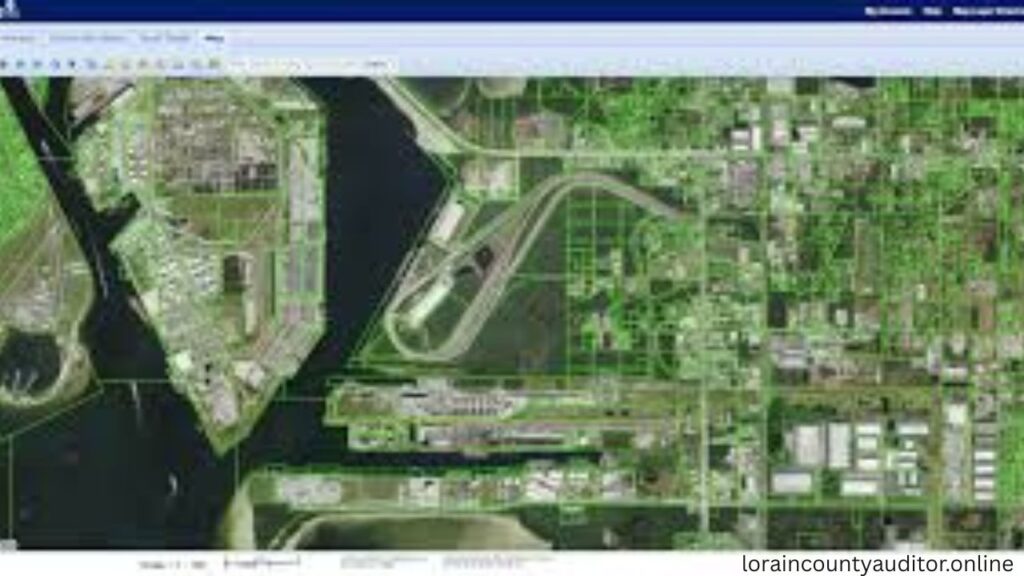
Lorain County Auditor parcel search digital interface showing online property database with maps, assessment values and ownership records
Starting Your First Search
Beginning a property lookup takes just seconds once you access the Lorain County Auditor parcel search homepage. The prominent search bar appears at the top of the page ready for your query. You can enter addresses, owner names, or parcel numbers depending on what information you have available.
Address searches work best when you know the street location of a property. Type the house number and street name to find specific parcels. The system recognizes various address formats making searches flexible and forgiving of minor variations.
Owner name searches reveal all properties associated with individuals or businesses. This feature helps when researching someone’s real estate holdings throughout the county. Partial name searches broaden results when you’re unsure of exact spellings.
Parcel number lookups provide the most direct route to specific property records. If you have this unique identifier from tax bills or other documents, enter it for instant results. The Lorain County Auditor parcel search jumps directly to the detailed property profile.
Understanding Lorain County Auditor Parcel Search Results
The Lorain County Auditor parcel search displays comprehensive property profiles when you find a match. All relevant information appears organized on a single page for easy reading. Maps, photos, and data tables work together to give you a complete picture of each parcel.
Property location maps show exact positions and boundary lines clearly marked. Aerial photography helps you visualize the actual land and structures. You can zoom in for detailed views or zoom out to see surrounding properties and neighborhoods.
Ownership information appears prominently listing current owners and their mailing addresses. The Lorain County Auditor parcel search shows how owners hold title whether individually, jointly, or through business entities. Transfer dates indicate when the current owners acquired the property.
Assessment values break down into land and building components separately. You can see how the auditor’s office calculated the total taxable value. Historical assessments show how values changed over time through different reappraisal cycles.
Interpreting Property Data
Tax information connects directly to your assessment showing exactly how bills get calculated. The Lorain County Auditor parcel search displays millage rates from schools, county government, municipalities, and special districts. You can verify that charges match the correct taxing authorities for the property’s location.
Building characteristics provide detailed descriptions of structures on the parcel. Square footage, room counts, construction materials, and age all appear in standardized formats. These specifications help you compare properties and verify assessment accuracy.
Sales history reveals every recorded transaction for the property parcel search . Dates and prices from past sales provide valuable market context. You can track how values changed over the years through actual arm’s-length transactions.
Legal descriptions define precise properties parcel search boundaries using technical surveying language. These metes and bounds descriptions survive even when street addresses change. They provide the most accurate way to identify specific parcels in legal documents.
Advanced Lorain County Auditor Parcel Search Features
The Lorain County Auditor parcel search includes powerful tools for conducting sophisticated property research. Advanced filters let you narrow results based on multiple criteria simultaneously. These features benefit real estate professionals, investors, and anyone conducting detailed market analysis.
Geographic options allow you to find all properties within specific areas. parcel search Select neighborhoods, school districts, or custom boundary areas to generate property lists. This capability helps identify investment opportunities or study market trends in targeted locations.
Property type filters separate residential, commercial, industrial, and agricultural parcels. Narrow your search to find exactly the kind of real estate that interests you. Combine type filters with other criteria for highly specific results.
Value range searches identify parcel search within particular assessment or sale price brackets. Set minimum and maximum values to match your budget or research parameters. The Lorain County Auditor parcel search streamlines the process of finding properties in your target price range.

Property research materials showing Lorain County Auditor parcel search results including tax assessments, deeds and comparable sales data
Using Interactive Maps
Map-based searching provides a visual approach to finding properties throughout the county. Click directly on parcels displayed on interactive maps to access their detailed records. This intuitive method works well when exploring unfamiliar areas or browsing neighborhoods.
Multiple map layers can be toggled on and off to display different information types. View parcel boundaries, aerial photos, street maps, or topographic features. Customize your map display to show exactly the information you need for your research.
Measurement tools built into the mapping system let you calculate distances and areas. Measure property frontages, lot depths, or distances to nearby landmarks. These tools help you understand property dimensions and spatial relationships.
Satellite imagery shows actual ground conditions rather than just surveyed lines. See buildings, trees, driveways, and other features as they exist on the ground. Recent imagery updates ensure you’re viewing current conditions not outdated photos.
Saving and Sharing Lorain County Auditor Parcel Search Results
The Lorain County Auditor parcel search allows you to save favorite properties for future reference. Bookmark parcels you’re monitoring or considering for purchase. Your saved list provides quick access without repeating searches each time you visit.
Email functions let you share property information with family members, advisors, or business partners. Send complete property profiles directly from the online platform. Recipients receive all the relevant data without needing to conduct their own research.
Print-friendly formats generate clean property reports suitable for paper copies. Remove unnecessary navigation elements and format information for optimal printing. These reports work well for offline review or including in presentation materials.
Download options provide property data in various digital file formats. Export information to spreadsheets for further analysis or record-keeping. Digital files make it easy to compile research across multiple properties.
Creating Property Reports
Comprehensive reports compile all available information about parcels into organized documents. These reports include ownership details, assessments, tax data, sales history, and building characteristics. Professional formatting makes the information easy to read and share.
Custom report options let you select which data fields to include. Focus on the specific information relevant to your needs while excluding unnecessary details. Tailored reports save time and present cleaner, more focused information.
Historical data comparisons show how properties changed over multiple years. Track assessment trends, ownership changes, and sales patterns over time. This longitudinal view reveals important patterns that single-year snapshots might miss.
Bulk export features allow downloading data for multiple properties simultaneously. Real estate professionals and researchers can compile datasets covering entire neighborhoods or market segments. Analyze hundreds of properties efficiently using exported data.
Property Assessment Information in Lorain County Auditor Parcel Search
The Lorain County Auditor parcel search provides detailed assessment data used to calculate property taxes. Professional appraisers evaluate every parcel following state-mandated procedures and standards. Understanding how these valuations work helps you interpret the information you find.
Assessed values represent a percentage of market value as determined by Ohio law. The state requires assessing property at 35% of true market value. A home worth $200,000 on the market carries a $70,000 assessed value for tax calculation purposes.
Reappraisal cycles occur every six years with updates at the three-year midpoint. During full reappraisals, field appraisers physically inspect properties and update all records. Update years use statistical analysis to adjust values without individual property visits.
Assessment breakdowns show separate values for land and improvements. Land value reflects the worth of the lot itself without considering buildings. Building value represents the structures and other improvements on the property.
Factors Affecting Assessments
Location within the county significantly influences property values and assessments. Properties near quality schools, shopping, and employment centers command premium valuations. Waterfront access, park proximity, and scenic views add substantial worth.
Physical characteristics determine much of any property’s assessed value. Square footage forms the foundation with larger homes generally valued higher than smaller ones. Bedroom and bathroom counts, garage spaces, and basement finishes all contribute to total assessments.
Construction quality and materials impact valuations considerably throughout the assessment process. Brick exteriors typically assess higher than vinyl siding. Hardwood flooring, granite countertops, and updated mechanical systems add measurable value.
Age and condition create significant variations even between seemingly similar properties. Well-maintained older homes can rival new construction in assessed value. Deferred maintenance, structural issues, and outdated systems reduce assessments substantially.
Tax Calculation and Payment Information
The database connects directly to tax calculation systems showing your complete obligations. Property taxes fund schools, county services, municipalities, and special districts. Understanding how these charges get calculated helps you verify bill accuracy.
Millage rates from various taxing entities multiply against your assessed value to determine taxes. One mill equals one dollar per thousand dollars of assessed value. Your location determines which taxing authorities apply to your specific property.
Tax bills break down charges by each entity receiving funds from your payment. School districts typically represent the largest portion of residential property taxes. County and city services follow with smaller amounts for libraries, parks, and other special purposes.
Payment schedules divide annual taxes into two installments for easier budgeting. First-half payments typically come due in late February while second-half payments are due in late July. The Lorain County Auditor parcel search shows payment history and any outstanding balances.
Understanding Your Tax Obligation
Current year taxes appear clearly in the records along with historical payment information. You can verify which years have been paid and identify any delinquent amounts. This transparency helps buyers understand obligations before purchasing properties.
Penalty and interest charges get calculated automatically when payments arrive late. The system shows these additional costs along with original tax amounts. Understanding these consequences motivates timely payment and helps avoid unnecessary expenses.
Tax reduction programs provide relief for qualifying property owners throughout the county. Homestead exemptions benefit seniors aged 65 and older plus disabled individuals. Owner-occupancy credits reward residents who live in their properties rather than renting them out.
Payment plan options help property owners facing temporary financial difficulties. Contact information for the treasurer’s office appears in the system for those needing assistance. Addressing payment challenges early creates more options than waiting until foreclosure proceedings begin.
Ownership and Transfer Records in Lorain County Auditor Parcel Search
The Lorain County Auditor parcel search tracks complete ownership histories for every property in the database. Each sale, inheritance, gift, or other transfer creates a permanent record. This comprehensive documentation establishes clear chains of title essential for property transactions.
Current owner information appears prominently at the top of each property profile. Names, mailing addresses, and ownership structures all display clearly in the system. Multiple owners and their specific interests show when properties have joint or shared ownership.
Transfer dates indicate when current owners acquired their properties through various means. Purchase dates from market sales provide the most common ownership changes. Estate transfers, divorce settlements, and other special circumstances also appear in the records.
Deed information shows how ownership was transferred affecting legal rights and responsibilities. Warranty deeds provide the strongest ownership protections. Quit claim deeds and other instruments carry different legal implications that affect title security.
Researching Property History
Historical ownership extends back through decades revealing complete property stories. Previous owners, transfer dates, and transaction types all appear in chronological order. This information proves invaluable for title research and understanding property evolution.
Sales prices from past transactions provide valuable comparable data for market analysis. You can see what previous owners paid and when those purchases occurred. This historical context helps establish current market values and identify pricing trends.
Legal descriptions provide precise boundary definitions that survive address changes over time. Metes and bounds surveys describe parcels using specific measurements and landmarks. These technical descriptions ensure accurate property identification in all legal documents.
Liens and encumbrances appear in property records alerting researchers to existing claims. Tax liens, mortgages, and judgment liens all affect property titles significantly. Identifying these issues before purchase prevents costly surprises during transaction closings.
Sales History and Market Analysis
The database maintains comprehensive sales records for every property transaction. This data forms the backbone of real estate market analysis throughout the county. Buyers, sellers, appraisers, and investors all rely on accurate sales information.
Transaction dates and sale prices appear for each recorded conveyance in the system. Arms-length sales between unrelated parties provide the most reliable market indicators. Family transfers and estate settlements receive different treatment in valuation analysis.
Market trends emerge when you analyze multiple transactions in specific neighborhoods or property types. Rising prices indicate strong demand and appreciation. Declining values may signal economic challenges or neighborhood changes affecting property worth.
Days on market statistics reveal how quickly properties sell in different areas. Fast sales suggest strong demand and proper pricing strategies. Extended marketing periods may indicate overpricing or weak market conditions requiring price adjustments.
Conducting Comparable Sales Research
Finding similar properties that sold recently helps establish current market values accurately. The Lorain County Auditor parcel search makes identifying these comparables straightforward and efficient. Look for homes matching yours in size, age, condition, and location.
Sale price adjustments account for differences between your property and comparable sales. Larger homes naturally sell for more than smaller ones all else being equal. Superior condition, modern updates, and desirable features justify premium pricing.
Geographic proximity matters significantly in comparable sales selection for accurate valuation. Properties within the same subdivision or neighborhood provide the best comparisons. Market conditions can vary substantially across different areas of the county.
Transaction timing affects how useful sales are for current property valuations. Recent sales reflect today’s market better than transactions from years ago. Markets change constantly making newer data more relevant for current pricing decisions.
Building Characteristics and Features
The Lorain County Auditor parcel search catalogs extensive details about structures and land improvements. This information supports accurate assessments and helps buyers understand what they’re purchasing. Building specifications appear in standardized formats enabling easy property comparisons.
Square footage calculations follow specific measurement standards ensuring consistency across all properties. Living area, finished basements, and garages all receive separate tabulation in the system. Understanding these distinctions helps in comparing properties accurately.
Room counts break down by bedrooms, bathrooms, and other functional spaces. Full baths, half baths, and three-quarter baths all appear distinctly in property records. Additional rooms like offices, bonus spaces, and sunrooms add to complete property descriptions.
Construction materials and quality grades influence both assessments and market values significantly. Wood frame, brick veneer, and masonry construction all appear in detailed building descriptions. Quality ratings from basic to excellent help differentiate otherwise similar structures.
Understanding Property Amenities
Special features such as fireplaces, swimming pools, and decks enhance property descriptions. Central air conditioning, updated kitchens, and finished basements receive specific notation. These amenities differentiate properties and influence market appeal substantially.
Lot size and dimensions affect property values particularly for residential parcels. Larger lots provide more privacy, yard space, and potential for future expansion. Dimensions help buyers visualize actual property size and configuration accurately.
Outbuildings like garages, sheds, and barns add measurable value to properties. Detached garages, carports, and pole barns all appear in improvement listings. These structures contribute to overall property functionality and worth.
Year built and effective age distinguish original construction from extensively renovated properties. A 1950s home with complete updates may function like much newer construction. Effective age accounts for improvements and renovations affecting overall property condition.
Commercial and Industrial Parcels
The system includes specialized information for non-residential properties throughout the county. Commercial buildings, industrial facilities, and mixed-use developments all receive detailed documentation. Valuation methods differ significantly from residential assessment practices.
Income potential forms the primary basis for commercial property valuations. Rental rates, occupancy levels, and operating expenses all factor into complex calculations. Capitalization rates reflect investor expectations for different property types and locations.
Zoning classifications appear in commercial records indicating permitted uses for each parcel. Retail, office, industrial, and agricultural zones all carry different restrictions and opportunities. Zoning changes show in historical records revealing property evolution over time.
Building specifications for commercial structures include details relevant to business operations. Clear height, loading docks, office percentages, and parking ratios all appear. These characteristics significantly impact commercial property values and marketability.
Industrial Property Details
Manufacturing and warehouse facilities receive specialized assessments reflecting their unique characteristics. Heavy power capacity, rail access, and ceiling heights all influence industrial property values. Environmental considerations may affect certain industrial site assessments and development potential.
Land area becomes particularly important for industrial operations requiring outdoor storage or expansion space. Acreage, lot dimensions, and site configuration all appear clearly in the records. Proximity to transportation networks adds substantial value to industrial locations.
Equipment and machinery sometimes blur the lines between real property and personal property. Assessment practices carefully separate building values from movable business assets. Understanding these distinctions helps business owners plan for tax obligations accurately.
Specialized use buildings designed for specific industries may have limited market appeal. Single-purpose facilities can be challenging to value and sell to different users. These unique characteristics appear in property records and assessment documentation.
Agricultural Land and Vacant Parcels
The Lorain County Auditor parcel search classifies agricultural parcels separately recognizing their unique characteristics. Farmland receives special tax treatment through Current Agricultural Use Valuation programs. These programs preserve farming operations by substantially reducing tax burdens.
Soil quality ratings and productivity classifications affect agricultural land values significantly. Prime farmland with excellent soils assesses differently than marginal agricultural property. Drainage characteristics, topography, and climate all influence agricultural productivity and value.
Vacant land awaiting future development carries different valuation characteristics than improved properties. Development potential based on zoning and available utilities affects market values significantly. Speculation about future use often drives vacant land prices beyond current agricultural use values.
Conservation easements and agricultural districts appear prominently in property records when applicable. These legal restrictions limit development protecting farming operations or natural features. They significantly impact both current property values and future use possibilities.
CAUV Program Information
Current Agricultural Use Valuation assesses farmland based on agricultural income rather than development potential. This program prevents property tax pressure from forcing farmers to sell productive land. The records show which properties receive CAUV treatment.
Minimum acreage requirements and active farming criteria determine program eligibility for landowners. Application deadlines fall early each year requiring advance planning. Documentation of agricultural use must accompany all applications for review.
Tax savings through CAUV can be substantial especially for qualifying properties near developing areas. Farmland adjacent to growing communities benefits most dramatically from the program. These annual savings often reach thousands of dollars supporting continued agricultural operations.
Recoupment penalties apply when land leaves agricultural use after CAUV enrollment. Recent tax savings get recaptured when properties convert to residential or commercial development. Understanding these financial consequences helps landowners make informed decisions about property use changes.
Appeals and Assessment Challenges
The system provides information relevant to assessment appeals and disputes. Property owners who believe their valuations are incorrect can challenge them through formal procedures. Understanding these processes protects your rights and financial interests.
Filing deadlines open after assessment notices arrive at property mailing addresses. You typically have 30 days to submit complaints to the Board of Revision. Missing these narrow windows means waiting years for the next reappraisal cycle.
Evidence requirements demand professional documentation supporting your valuation challenge claims. Licensed appraisals carry the most weight in appeal hearings before the board. Comparable sales data, photographs showing defects, and expert testimony strengthen cases substantially.
The Board of Revision operates as an independent tribunal hearing evidence from both sides. Board members include county officials and appointed representatives from different sectors. Their decisions can increase, decrease, or maintain existing assessments based on evidence presented.
Building a Strong Appeal
Professional appraisals provide expert opinions about true market value for appeal purposes. Licensed appraisers inspect properties thoroughly and prepare detailed written reports. These documents cost several hundred dollars but can save thousands in taxes over time.
Comparable sales research identifies similar properties recently sold in your immediate neighborhood. Find at least three genuinely comparable properties with well-documented sale prices. Show how your property compares unfavorably despite carrying a higher assessment.
Property condition documentation proves assessment inaccuracies or deterioration since the last inspection. Photographs showing damage, outdated features, or structural issues support reduction claims. Contractor estimates for necessary repairs quantify financial impacts on property value.
Presentation quality matters significantly during Board of Revision hearings and deliberations. Organized exhibits, clear explanations, and respectful demeanor help your case considerably. Written summaries allow board members to review arguments carefully during their decision-making process.
Privacy and Public Records Access
The database balances transparency with individual privacy protections carefully. Most property information is public by law supporting open government principles. Certain personal details receive statutory protection from public disclosure.
Ownership names and property addresses appear as public information accessible to anyone. This transparency prevents hidden ownership structures and promotes accountability. Public access helps verify property claims and conduct legitimate real estate market research.
Social security numbers, bank account details, and similar sensitive information never appear in public records. Privacy laws strictly protect this data from disclosure in the system. The auditor’s office takes these responsibilities seriously maintaining appropriate technical safeguards.
Email addresses and phone numbers generally don’t appear in standard property records. Personal contact information stays private unless property owners voluntarily share it publicly. This protection prevents unwanted solicitation while maintaining necessary governmental transparency.
Appropriate Use Guidelines
Property records serve legitimate purposes including market research and transaction due diligence. Buyers researching potential purchases have every right to access available public information. Lenders, appraisers, and title companies need these records for essential professional services.
Inappropriate uses of public records include harassment, stalking, or identity theft schemes. Laws specifically prohibit using public information for illegal purposes. Ethical users respect individual privacy while exercising their rights to access public information.
Commercial data services compile and resell property information obtained from public records. Real estate websites, marketing companies, and research firms all utilize this data. Such commercial uses remain legal and serve various legitimate business purposes.
Individual privacy concerns sometimes conflict with public records access requirements and expectations. Finding appropriate balance requires respecting both governmental transparency and personal privacy. The current system attempts to serve both important interests reasonably well.
Mobile Access with Lorain County Auditor Parcel Search
The Lorain County Auditor parcel search works seamlessly on smartphones and tablets for on-the-go research. Mobile optimization ensures all features function properly regardless of device size. You can conduct thorough property research anywhere you have cellular or WiFi connectivity.
Responsive design automatically adapts the interface to fit different screen sizes perfectly. Navigation menus, search forms, and data displays all adjust for optimal mobile viewing. Touch-friendly controls make interaction natural on devices without traditional mice and keyboards.
Location-based features help you identify properties near your current position using GPS. This capability proves valuable when exploring unfamiliar neighborhoods or driving through different communities. Discover property details about interesting buildings you encounter during your travels.
Saved searches and bookmarks sync across devices for consistent access to your research. Start a search on your desktop computer and continue reviewing results on your phone. This flexibility supports your workflow however and wherever you prefer to work.
Practical Mobile Applications
Real estate agents use mobile access during property showings to answer client questions immediately. Pull up tax records, assessment histories, and comparable sales data on the spot. This instant information access enhances professional credibility and client service.
Home buyers browse neighborhoods while researching properties through their phones. See a “For Sale” sign and look up the property’s complete history instantly. Compare asking prices with assessed values before even contacting listing agents.
Investors driving through target areas can quickly analyze potential acquisitions using mobile devices. Identify property owners, check tax payment status, and review sales histories within seconds. Make informed decisions about which properties deserve deeper investigation.
Property owners verify their own information accuracy while away from home computers. Check that recent improvements appear in building records or verify payment receipt. Mobile access provides peace of mind and convenient account monitoring.
Future Enhancements and Technology
The system continues evolving with emerging technologies and user needs. Planned improvements will enhance functionality and user experience in coming years. Staying informed about these developments helps you take advantage of new capabilities.
Artificial intelligence tools may soon provide automated property valuations and market predictions. Machine learning algorithms can analyze vast datasets identifying patterns humans might miss. These technologies promise improved accuracy in assessment and market analysis.
Enhanced data visualization features will make complex information more understandable for all users. Interactive charts, trend graphs, and heat maps help users grasp market dynamics quickly. Visual analytics transform raw data into actionable insights supporting better decisions.
Mobile applications dedicated specifically to property research may offer expanded functionality. Native apps could provide features beyond what web browsers support including offline access. Push notifications might alert users to changes in saved properties or targeted areas.
Conclusion: Mastering the Lorain County Auditor Parcel Search
The Lorain County Auditor parcel search puts comprehensive real estate information at your fingertips instantly. Understanding how to access and interpret these records gives you significant advantages in property matters. Whether buying, selling, investing, or simply staying informed, this system empowers better decisions.
Modern technology has democratized property information once available only to professionals and insiders. Anyone with internet access can now research properties as thoroughly as experienced agents using the Lorain County Auditor parcel search. This transparency promotes fairness and informed participation in real estate markets.
Take time to explore the database and familiarize yourself with all available tools. Practice different search methods and learn to interpret the various data fields. The more comfortable you become with the Lorain County Auditor parcel search, the more value you’ll extract.
Stay informed about property values, tax assessments, and market trends in your community. Regular monitoring helps you understand your real estate investments better. Knowledge truly empowers better property decisions and financial planning.
The resources available through the Lorain County Auditor parcel search continue expanding and improving regularly. New features and capabilities emerge making property research easier and more comprehensive. Your engagement with these systems benefits both personal interests and community transparency.
FAQ Section
Q1: How do I access the Lorain County Auditor parcel search? Visit the official county website and click on the property search tool to begin searching by address, owner name, or parcel number instantly.
Q2: What information appears in the Lorain County Auditor parcel search results? Results show ownership details, assessment values, tax information, sales history, building characteristics, and interactive property maps.
Q3: Is the Lorain County Auditor parcel search free to use? Yes, the search tool is completely free with no registration required for accessing public property records.
Q4: Can I use Lorain County Auditor parcel search on my smartphone? Yes, the mobile-optimized interface works perfectly on smartphones and tablets allowing property research anywhere with internet access.
Q5: How current is the information in the Lorain County Auditor parcel search? The system updates regularly with recent sales appearing within days and assessment changes reflecting immediately after official approval.
Q6: What is a parcel number in Lorain County Auditor parcel search? A parcel number is a unique permanent identifier assigned to each property that never changes regardless of ownership or address changes.
Q7: Can I save properties in the Lorain County Auditor parcel search? Yes, bookmark features let you save properties for future reference and quick access without repeating searches.
Q8: How do I find specific neighborhoods using Lorain County Auditor parcel search? Use geographic search filters or click directly on areas in the interactive map to find all properties within specific boundaries.
Q9: Does the Lorain County Auditor parcel search include commercial properties? Yes, the system includes residential, commercial, industrial, and agricultural properties throughout the county.
Q10: Can I download information from Lorain County Auditor parcel search? Yes, generate printable reports or export data in various digital formats for offline analysis and record-keeping.